
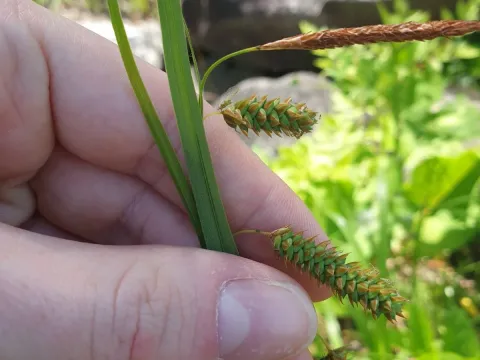
Carex maximowiczii
Carex maximowiczii
Carex maximowiczii, commonly known as Maximowicz sedge, is a perennial plant belonging to the Cyperaceae family. It is a moisture-loving species naturally occurring in riparian zones, river floodplains, and wet meadows across East Asia, including regions in Russia, Japan, and China.
What the section contains
Carex maximowiczii
This crop thrives in climates characterized by abundant rainfall and moderate temperatures. Its ability to tolerate saturated soils and occasional flooding makes it an essential species for maintaining the ecological balance in wetland areas where conventional crops would fail.
Regarding soil conditions, this sedge prefers fertile, hydromorphic, or boggy soils. It performs best in slightly acidic to neutral environments. Its root structure creates a dense network that prevents soil erosion and stabilizes banks, proving its value as a biological tool for soil management.
Botanically, the plant features erect, triangular stems and tough, fibrous leaves. This physical structure allows the plant to withstand harsh weather conditions and wind pressure, while also providing a high volume of biomass production in specific habitats.
In terms of agricultural utility, Carex maximowiczii is primarily used for land reclamation and as a supplementary forage source in remote, high-moisture regions. Although not a primary grazing crop, it provides necessary roughage for livestock when traditional grasses are unavailable.
Harvesting should be timed to coincide with the heading stage of the plant. Collecting the biomass at this phase ensures that the nutrient content is maximized before the stems become overly lignified and tough for potential animal consumption.
Mechanical harvesting requires machinery with low ground pressure to avoid damaging the delicate root systems embedded in the wetland substrate. Proper equipment ensures the longevity of the stand and promotes robust regrowth in the following seasons.
Drying is a critical step in the post-harvest process due to the high moisture content of the sedge tissue. Effective techniques include spreading the cut material in thin layers or utilizing forced air circulation to ensure moisture is removed quickly to prevent spoilage.
Storage management is vital for maintaining the quality of the harvested biomass. The final product must be kept in cool, dry areas with adequate ventilation to prevent mold and fungal growth, which can occur rapidly in damp conditions.
Ultimately, a well-managed harvest cycle supports the sustainability of these wet meadows. By leaving enough stubble, farmers can ensure the plant's capacity to regenerate, maintaining both soil health and future yield potential on their land.