
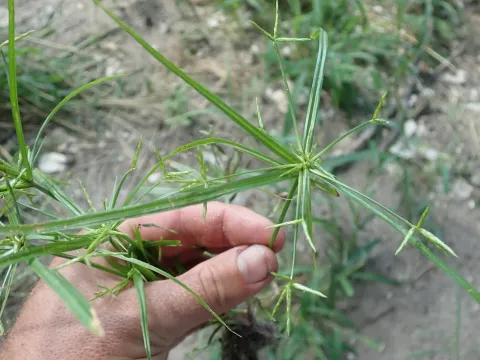
Zollinger sedge
Cyperus zollingeri
Zollinger sedge (Cyperus zollingeri) is a perennial herbaceous plant belonging to the Cyperaceae family. In agricultural applications, it is valued for its robust growth habit and ability to produce significant biomass, particularly in tropical and subtropical environmental conditions.
What the section contains
Zollinger sedge
The sowing process typically begins when soil temperatures consistently reach 18–20 degrees Celsius. Seeds should be placed in a prepared, fine-textured seedbed at a depth of approximately 1–2 centimeters, ensuring adequate contact with the moist soil particles for successful germination.
Spacing is a critical factor for productivity. It is recommended to maintain row distances of 35–50 centimeters. This provides sufficient room for the plant's extensive rhizome development and ensures that each individual specimen receives enough solar radiation to sustain photosynthesis.
In addition to seed propagation, the plant can be propagated vegetatively through the division of mature rhizomes. This method is often preferred for field establishment as it allows for a faster maturation period and a more uniform crop canopy compared to seeding.
During the early establishment phase, irrigation management is paramount. The soil must remain consistently moist to prevent the sensitive seedlings from desiccating. Once the root system is established, the plant exhibits higher tolerance to fluctuating environmental conditions.
Zollinger sedge thrives in environments characterized by high humidity and consistent moisture levels. While it can adapt to various soil textures, it shows optimal performance in nutrient-rich, well-draining loams that retain sufficient moisture throughout the growing season.
Light availability is the primary driver of development for this species. It is a sun-loving plant that requires full exposure to flourish. Reduced light levels lead to etiolation, weakened stalks, and an increased susceptibility to lodging or disease pressure.
The plant demonstrates a remarkable tolerance to waterlogged soils, a characteristic derived from its ecological niche in wetlands. However, it still prefers soil aeration, as prolonged anaerobic conditions in the root zone can eventually restrict the intake of essential nutrients.
Temperature requirements for Zollinger sedge are relatively high. The ideal range for active growth falls between 22 and 30 degrees Celsius. It does not possess significant cold tolerance and will cease physiological activity if temperatures drop below critical thresholds.
Nutrient management involves regular applications of nitrogen-rich fertilizers to support leaf development. Additionally, potassium and phosphorus should be supplied based on soil test results to ensure the plant maintains a sturdy and healthy growth structure.
The crop is generally hardy, yet it remains susceptible to various fungal pathogens under high-humidity conditions. Leaf spot diseases are the most common issue, appearing when air circulation between the dense stands of the plants is insufficient.
Root-knot nematodes present a significant risk to the underground rhizome structures, potentially causing localized yield losses. Implementing crop rotation cycles helps reduce the prevalence of soil-borne pests that affect the root systems of sedge crops.
Insect pests, such as aphids and spider mites, can damage the foliage during periods of drought or poor plant health. Integrated pest management strategies, utilizing both predatory insects and biological control agents, are effective in maintaining damage at negligible levels.
Inadequate sanitation in the field often leads to the accumulation of fungal spores in plant debris. Removing fallen or decaying organic matter from the field after the harvest cycle is an essential practice to prevent the buildup of inoculum for the next season.
Environmental stress, particularly excessive moisture combined with low temperatures, can weaken the plant's natural defense systems. Maintaining a balanced growing environment through proper irrigation and drainage is the best defense against complex disease patterns.