
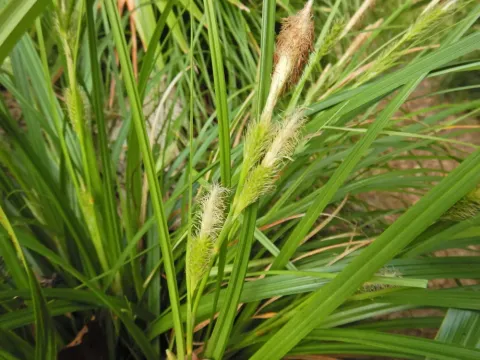
Boott's sedge
Carex boottiana
The sowing of Boott's sedge is primarily conducted in the spring when the soil warms up to 8–10 degrees Celsius. The optimal time for establishing plantations is late April or early May, which allows seeds to utilize moisture after snowmelt.
What the section contains
Boott's sedge
During sowing, seeds are planted at a shallow depth, usually no more than 1–2 centimeters, as they have low germination energy when buried deeply. It is essential to ensure close contact between the seeds and moist soil for uniform sprouting.
To create a dense turf, it is recommended to use a row seeding method with spacing of about 15–20 centimeters. This facilitates subsequent maintenance of the fields and weed control during the early vegetation period.
Late-autumn sowing is permissible in regions with a mild climate where there is no risk of seed freezing during winter thaws. With this approach, the seeds undergo natural stratification in the soil.
After emergence, the crop requires regular weeding, as young sedge grows quite slowly and can be suppressed by rapidly developing weeds.
Boott's sedge is a hygrophilous plant, so the main requirement for growth conditions is sufficient soil moisture. It tolerates temporary waterlogging well but is extremely sensitive to prolonged periods of drought.
The crop prefers fertile loamy or peaty soils with a neutral or slightly acidic reaction. It responds well to the application of organic fertilizers, which improve soil structure and water-holding capacity.
The plant demonstrates high adaptability to lighting, although the most active development is observed in open, well-lit areas. In shaded conditions, the accumulation of green biomass is noticeably reduced.
Climatic conditions for this sedge should ensure a moderately warm growing season. It is capable of tolerating recurring frosts without significant damage to the aerial parts, making it a resilient crop for northern regions.
Agrotechnical maintenance includes maintaining an optimal groundwater level if cultivation is carried out on reclaimed lands to avoid desiccation of the root system.
The green mass yield of Boott's sedge depends directly on the availability of nitrogen fertilizers and regular irrigation. In favorable years, the crop can produce up to 3–5 tons of dry matter per hectare.
Maximum biomass output is achieved in the second or third year after sowing, when the plants fully form a turf and develop a powerful root system. It is during this period that productivity reaches its peak values.
To maintain high yields in subsequent years, it is recommended to perform annual harrowing of the plantations. This stimulates plant tillering and prevents thinning of the stand.
The quality of the harvest is determined by the growth stage: for the most nutritious hay, mowing is conducted at the beginning of the flowering phase. Late mowing leads to the coarsening of stems and a decrease in protein content.
Boott's sedge is characterized by good regrowth capacity, which allows for two full cuttings in a single growing season if moisture is available.
The main threat to the crop is posed by fungal diseases, such as leaf rust, which develops under high humidity and dense planting. Infestation leads to a decrease in the nutritional quality of the hay.
Among pests, wireworms are the most dangerous, damaging the sedge root system during the establishment period. To protect crops, it is recommended to conduct pre-sowing seed treatment with specialized protectants.
Leaf-eating insects, including various cereal flies, can damage young shoots. In case of mass outbreaks of pests, systemic insecticides that are approved for use should be applied.
Violating crop rotation and returning sedge to the same plot earlier than after 4–5 years contributes to the accumulation of specific soil-borne infections. This leads to the gradual thinning of the stand.
- Leaf rust
- Root rot
- Wireworms
- Cereal flies