
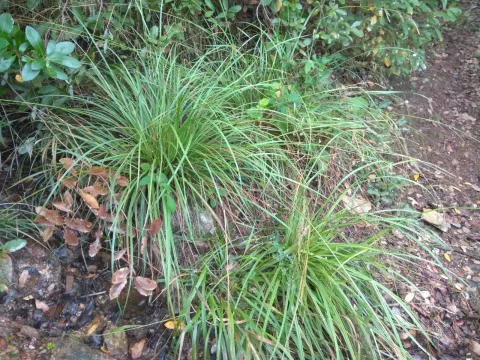
Carex helodes
Carex helodes
Carex helodes is a perennial herbaceous plant belonging to the Cyperaceae family. It is typically found in waterlogged habitats, along lake margins, and in low-lying marshes where water levels are consistently high.
What the section contains
Carex helodes
This species is highly adapted to saturated soil conditions. It thrives in peat-rich or gley soils, areas where standard agricultural crops often fail due to excessive moisture levels.
The plant prefers well-lit environments but is capable of growing in partial shade in river floodplains. Its fibrous root system is essential for binding soil and preventing erosion in riparian zones.
Successful cultivation of Carex helodes requires the maintenance of a stable hydrological regime. Fluctuations that lead to substrate drying can significantly reduce biomass accumulation rates.
Carex helodes exhibits excellent cold tolerance. It is known to initiate vegetative growth very early in the spring, taking advantage of the moisture preserved in the soil from the winter months.
The agricultural utility of Carex helodes primarily focuses on biomass production, which can be utilized for low-grade forage or bedding material for livestock.
When intended for fodder, harvesting must be timed before the stems become overly fibrous and lignified. Early cutting ensures a higher nutrient content in the harvested plant material.
Yield potential is largely determined by soil fertility and the mineral content of the water. In nutrient-rich wetland environments, the species can produce substantial volumes of vegetation.
Beyond forage, the plant is valued for phytoremediation purposes. It effectively absorbs excess nitrogen and phosphorus from water, serving as a biological filter in managed wetland systems.
Potential industrial applications include the production of eco-friendly packaging materials, woven goods, or mulch layers that help suppress weeds in specialized agro-forestry systems.
The primary diseases affecting Carex helodes include various types of rust and leaf spot fungi. These pathogens are most prevalent in dense stands with poor airflow and high humidity.
Pest issues include insects that feed on the soft tissues of leaves and stem bases. Such infestations can weaken the plants, making them more susceptible to environmental stress.
Fungal infections can also target the reproductive organs of the sedge, which limits natural seed production and potentially leads to the decline of stand density over time.
Management strategies involve maintaining appropriate plant spacing and periodic mowing to reduce the accumulation of diseased plant debris within the stand.
Chemical control is generally impractical in wetland ecosystems, so farmers prioritize mechanical management and selection of healthy planting material to minimize pathogen transmission.
Harvesting is best conducted during the flowering period, ensuring that the nutrient density in the aerial parts is at its peak before the energy is diverted into seed set.
Operational challenges in wetland environments often necessitate the use of specialized low-ground-pressure machinery. In small-scale settings, manual cutting remains a common practice.
Post-harvest management is critical due to the high internal water content of the tissues. Proper drying, involving multiple turnings of the material, is required to prevent rotting.
When the crop is used for bedding, harvesting timing is more flexible, often occurring later in the season when the stems are naturally more mature and easier to dry.
Stored biomass must be kept in well-ventilated conditions to prevent the growth of molds and fungi, ensuring the material remains suitable for its intended agricultural purpose.