
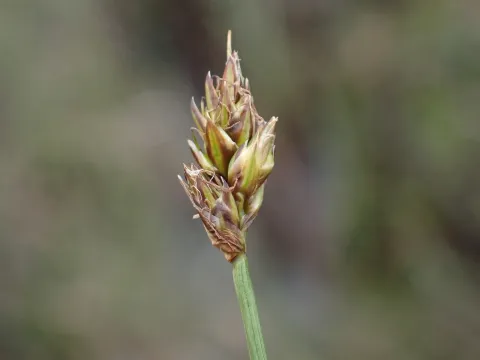
Carex heleonastes
Carex heleonastes
Carex heleonastes is a perennial herbaceous plant belonging to the Cyperaceae family. It is a highly specialized species that naturally occurs in wetland ecosystems across the boreal regions of the Northern Hemisphere.
What the section contains
Carex heleonastes
The plant originates from marshy areas and peatlands in Northern Europe, Asia, and North America. It is typically found in mesotrophic to oligotrophic bog environments, characterized by high water tables and acidic soil pH.
Its growing requirements include consistent soil saturation and exposure to direct sunlight. The species exhibits remarkable frost tolerance, allowing it to thrive in subarctic climates where other vegetation types may struggle to survive.
Botanically, it forms dense, compact tufts or tussocks. The stems are relatively short, usually up to 40 cm in height, with narrow, grey-green leaves that allow for efficient respiration and photosynthesis in cool, wet environments.
In terms of land use, it is primarily valued for its role in soil stabilization and the maintenance of biodiversity in wetland restoration projects. While not a commercial crop, its ecological presence is essential for healthy peatland ecosystems.
The most significant threat to this species is the drainage of wetlands for agricultural expansion or peat extraction. Changes to the hydrological profile can lead to immediate local extinction of the plant population.
Fungal pathogens, particularly rust fungi, represent a common threat during seasons with excessive moisture and poor air circulation. These diseases primarily impact the vitality of the leaves and may restrict growth.
Insect pests, including specialized weevils and leaf-mining larvae, may affect the vegetative parts of the sedge. However, these interactions are usually localized and do not cause large-scale devastation in healthy populations.
Succession by woody plants is a major threat in the absence of traditional grazing or environmental management. As shrubs and trees colonize the bog, the light-demanding sedge is eventually shaded out.
Sustainable management requires the preservation of natural hydrological cycles and the prevention of excessive nutrient runoff, which can promote more aggressive invasive species at the expense of Carex heleonastes.