
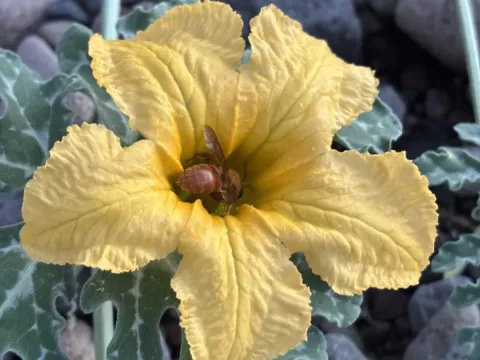
Heart-leaved squash
Cucurbita cordata
The heart-leaved squash (Cucurbita cordata) is a perennial herbaceous plant belonging to the Cucurbitaceae family. Unlike common annual squash varieties, this species has evolved a deep taproot, which allows it to thrive in the harsh, arid landscapes of its native North America.
What the section contains
Heart-leaved squash
The species is primarily distributed across the desert regions of the southwestern United States. It is highly specialized for survival in environments with low rainfall, poor soil quality, and intense solar radiation, making it an excellent subject for studying drought-tolerant physiology.
When cultivated, the heart-leaved squash requires well-drained, sandy soils that mimic its natural habitat. It cannot tolerate waterlogged conditions, as the root system is prone to rapid decay in the presence of excess moisture and poor soil aeration.
A location with full sun exposure is mandatory for this plant. As it is adapted to high-light environments, any shade will significantly inhibit the plant's metabolic activity, leading to stunted vegetative growth and a failure to produce flowers or viable seeds.
The horticultural use of Cucurbita cordata is focused on its genetic potential. Because the fruits often contain bitter compounds, they are not typically consumed as food; however, the plant serves as a valuable resource for cross-breeding programs aiming to improve the drought resistance of commercial varieties.
Powdery mildew is a significant threat to the foliage of Cucurbita cordata, especially when ambient humidity levels rise above the plant's typical comfort zone. This fungal pathogen manifests as a white, dusty layer on the leaves, severely hindering the plant's ability to photosynthesize.
Aphids and spider mites are common pests that colonize the leaves during hot, dry periods. These insects extract sap from the plant, which can lead to leaf yellowing, tissue necrosis, and a general decline in the plant's overall vitality if infestations are not managed.
Root rot is perhaps the most dangerous issue for this species in non-natural settings. If the soil does not allow for efficient drainage, the roots will succumb to fungal pathogens, resulting in the sudden wilting and eventual death of the entire plant structure.
Pollinator decline poses a threat to the reproduction of this squash. Since the plant relies on specific native bees for successful fertilization, any disruption to the local insect population directly impacts the production of seeds, which is essential for the species' persistence.
Integrated pest management strategies are recommended over chemical controls. By encouraging beneficial insects and ensuring optimal soil drainage, growers can effectively protect the heart-leaved squash from common pests and diseases while maintaining the health of the surrounding environment.