
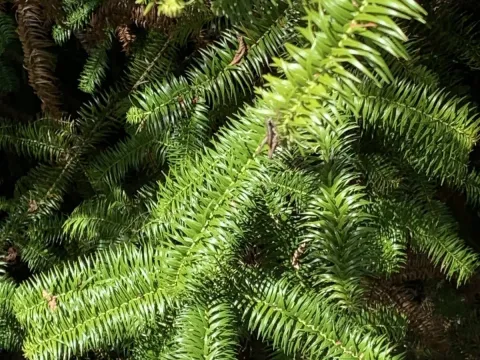
Cunninghamia kawakamii
Cunninghamia kawakamii
Cunninghamia kawakamii is an endemic conifer species that propagates mainly through seeds or vegetative methods in specialized nurseries. The optimal time for sowing seeds in a substrate is early spring, once the threat of night frosts has passed and a stable temperature regime is established.
What the section contains
Cunninghamia kawakamii
Successful seed germination requires preliminary stratification to simulate natural winter dormancy conditions. Sowing is performed in a loose, well-drained substrate supplemented with peat and sand, maintaining constant soil moisture until seedlings emerge.
In commercial forestry, saplings are transplanted to their permanent site at 2–3 years of age when the root system is sufficiently developed for outdoor survival. Autumn planting is possible only in regions with a mild climate where the risk of young saplings freezing is minimal.
When selecting a site, it is crucial to consider the intensity of natural light: young plants require shading, whereas adult specimens prefer open areas with good access to sunlight. Planting density is calculated based on forestry management goals and the growth rates of the specific plot.
Care for young plantations includes regular monitoring of needle health and timely removal of weeds within a half-meter radius of the trunk. This ensures that seedlings have access to nutrients and reduces competition for moisture during critical vegetation periods.
This crop belongs to the Cupressaceae family and is native exclusively to the mountainous regions of Taiwan. It has strict requirements for air humidity levels, preferring regions with frequent fog and precipitation typical of subtropical forests.
The tree is demanding regarding soil conditions: it develops best in deep, fertile, and moderately acidic soils with good aeration. Water stagnation in the root zone is detrimental to the plant, so slopes that provide natural drainage of excess moisture are preferred.
The temperature range for Cunninghamia kawakamii growth is limited: the plant does not tolerate prolonged severe frost well, although it can withstand short-term temperature drops. The ideal temperature range for active growth is between 15–25 degrees Celsius.
In cultivation, the tree reaches significant sizes, so it requires sufficient space for the development of its root system and crown. Protection from strong winds is an important agrotechnical measure to prevent trunk deformation and damage to fragile young branches.
Biologically, the species is adapted to competition in mixed forests, but when cultivated as a single crop, it requires density control to prevent the suppression of neighboring trees. Maintaining optimal soil mineral composition through organic fertilization accelerates biomass growth rates.
The main economic value of the crop lies in the production of valuable timber, prized for its resistance to rot and pests. Yield in forestry is estimated by the volume of wood mass accumulated per unit area over a full harvest rotation cycle.
With proper agrotechnics, the growth rate of Cunninghamia kawakamii allows for industrial harvesting within 30–50 years. The timber is characterized by softness, ease of processing, and a pleasant aroma, making it a popular material for furniture production.
Intensive forestry involving regular thinning allows for an increased yield of high-quality lumber. Land use efficiency depends directly on the genetic quality of the planting material and compliance with forest maintenance standards.
In addition to timber, plantations of this crop contribute to environmental improvement and moisture retention in the soil. Economic use also includes the application of needle extracts in pharmaceutical and cosmetic industries, providing additional income to plantation owners.
The assessment of the potential productivity of a site should be conducted by specialists, taking into account local microclimatic features. Yield forecasting is based on measuring trunk diameter and tree height growth on sample plots over several years.
Cunninghamia kawakamii is susceptible to a number of pathogens typical of the Cupressaceae family. The most dangerous are fungal diseases that develop under conditions of high humidity and poor air circulation within the forest stand.
Among pests, specific types of bark beetles and needle-eating insects cause the most significant damage. They can affect both young saplings and adult trees, weakening their immunity and making them vulnerable to secondary infections.
- Fungal needle infections (Fusarium and spot diseases).
- Root rot caused by soil waterlogging.
- Insect pests (conifer weevils, sawflies).
- Damage by rodents at a young age.
- Infections transmitted through tools during pruning.
Control of threats is based on integrated protection principles: use of healthy planting material, regular sanitary logging, and maintaining optimal planting density. Chemical protection methods are used only in extreme cases, mainly in specialized nurseries.
Monitoring plantation health during periods of prolonged rain allows for the timely identification of fungal spread outbreaks. Preventive removal of dried and damaged branches significantly reduces the risk of secondary infection of healthy specimens in the stand.