
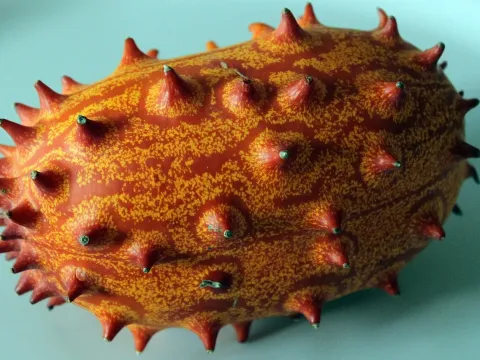
Kiwano
Cucumis metulifer
Kiwano is a heat-loving vine from the Cucurbitaceae family, originating from sub-Saharan Africa. It requires a long, frost-free growing season to thrive and produce fruit.
What the section contains
Kiwano
Seeds should be started indoors in individual pots 3 to 4 weeks before the last frost date, as the seedlings do not tolerate cold temperatures or root disturbance.
Maintain an environment of at least 25 degrees Celsius for germination. Once temperatures are consistently warm, the seedlings can be hardened off and transplanted.
Selecting a location with full sun exposure is crucial for the success of this crop, as it helps the plant accumulate the heat units necessary for fruit set.
When transplanting into the garden or greenhouse, ensure the soil has been warmed beforehand to prevent shock to the young root system.
The plant thrives in fertile, well-draining soil with a neutral pH level. Incorporating organic compost before planting helps maintain moisture while ensuring nutrients are available.
Because kiwano is a vigorous climber, providing a sturdy trellis or vertical support system is essential for airflow and preventing fruit contact with damp soil.
Watering should be consistent but careful. While the plant needs hydration to support its dense foliage and fruits, excessive waterlogging can quickly lead to root rot.
Kiwano prefers hot, humid climates. If grown in cooler regions, a greenhouse or a sheltered, sunny wall is recommended to replicate its native environmental conditions.
Regular monitoring of soil moisture and the application of balanced liquid fertilizers during the flowering stage will significantly increase the total yield per plant.
Like other cucurbits, kiwano is susceptible to powdery mildew and anthracnose, which are exacerbated by high humidity and poor circulation within the canopy.
Pests such as aphids, spider mites, and whiteflies often target the underside of the leaves. Early detection is key to preventing severe infestations that damage yield.
Integrated pest management, including the use of neem oil or insecticidal soaps, is highly effective for home gardeners looking to keep their harvest organic.
Ensuring proper spacing between vines significantly reduces the likelihood of fungal disease spread by allowing air to dry the leaves quickly after irrigation.
Removing weeds and debris from the base of the plant helps minimize the habitat for soil-borne pathogens and competing pests.
Harvesting should occur when the spiky skin of the fruit transitions from bright green to a deep, vibrant yellow-orange color.
For optimal shelf life, fruits can be picked slightly before they are fully soft. They will continue to ripen off the vine at room temperature for several weeks.
Using a sharp pruner, cut the fruit from the vine, leaving a small portion of the stem attached to the fruit to maintain its integrity during storage.
The fruit's unique rind acts as a protective barrier, allowing kiwano to be stored for several months in a cool, dry place, which is a significant advantage of this crop.
The green, gelatinous pulp is commonly used in salads, smoothies, and decorative arrangements, valued for its refreshing taste and high nutritional content.