
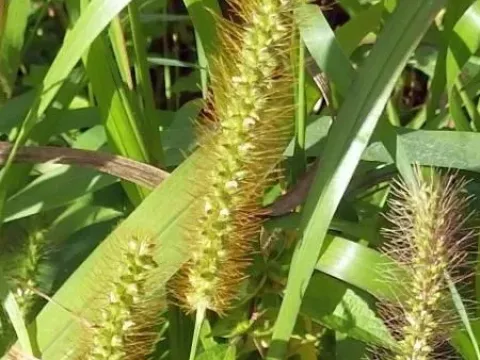
Ctt-tail millet
Setaria pallidefusca
Sowing of Setaria pallidefusca should take place once the soil has warmed up significantly, as the crop is highly sensitive to frost. Late spring is the standard timeframe for seeding in most temperate regions.
What the section contains
Ctt-tail millet
Seeds are sown at a shallow depth of 1 to 2 centimeters. This depth ensures they remain in contact with soil moisture while allowing enough energy for the sprout to reach the surface effectively.
Proper field preparation is essential to eliminate competition from existing weeds. Since initial development is slow, a clean seedbed is a prerequisite for a successful and uniform crop stand.
Compaction after sowing is recommended to encourage capillary action, bringing moisture up to the seeds and increasing the percentage of germination in drier soil conditions.
Choosing an appropriate seeding rate is critical to balance the density of the crop and ensure that individual plants have sufficient space to develop robust root systems early on.
Setaria pallidefusca belongs to the Poaceae family. It is a highly thermophilic and drought-tolerant grass, making it an excellent candidate for regions where water resources are restricted.
The plant thrives best in well-drained loamy or sandy soils. It demonstrates a remarkable ability to adapt to varying soil conditions, provided that waterlogging is avoided at all times.
Sunlight is a key factor for the development of this grass. As a C4 plant, it performs photosynthesis efficiently under high-intensity light and heat, which promotes rapid biomass accumulation.
Nutrient requirements are moderate, but the plant responds positively to nitrogen fertilization during the early vegetative stage. This boost is particularly useful when the crop is intended for forage.
The deep and fibrous root system of this species allows it to remain productive even during periods of scarce rainfall, distinguishing it from more moisture-demanding fodder crops.
Fungal diseases, including various types of smut and leaf rust, represent the primary biological threat to the crop. These are most prevalent in humid climates during the flowering phase.
Insect pests such as aphids and leaf beetles can cause significant damage to the foliage, reducing the plant's ability to photosynthesize and slowing down overall growth rates.
Cutworms pose a danger to seedlings, often severing the stem at the base. Monitoring the field during the early growth stage is essential to prevent significant stand loss from these larvae.
- Monitor fields weekly during peak insect activity.
- Use certified, disease-free seed to prevent soil-borne pathogens.
- Apply crop rotation to break the lifecycle of common pests.
Effective weed management in the first few weeks is crucial, as the crop is not inherently aggressive against faster-growing native weed species during its infancy.