
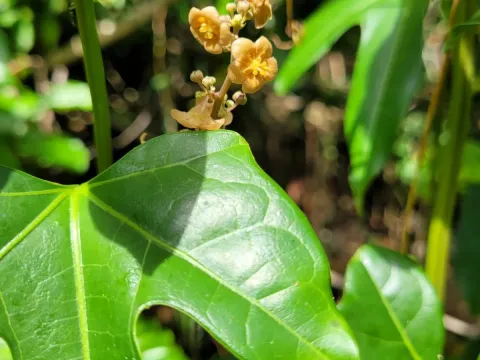
Fevillea
Fevillea
Fevillea is a perennial woody vine, typically propagated through seeds within controlled environments such as greenhouses or tropical nurseries.
What the section contains


Fevillea
Seeds should be sown in the spring when substrate temperatures remain stable between 22-25 degrees Celsius to ensure consistent germination.
It is recommended to soak the seeds for 24 hours prior to planting to soften their thick outer coat and improve the speed of emergence.
The optimal planting depth is 3-5 centimeters, ensuring sufficient moisture contact while protecting the embryo from surface desiccation.
Using a lightweight, well-draining soil mix enriched with organic matter provides the best foundation for young seedling development.
Native to the humid tropical forests of Central and South America, Fevillea requires a climate characterized by high temperatures and consistent warmth.
The plant thrives in deep, fertile loam soils that are rich in humus and maintain a neutral to slightly acidic pH balance.
As a climbing vine, the plant biologically requires a sturdy trellis or vertical structure to support its rapid vegetative growth.
While the plant is moisture-loving, it is highly sensitive to waterlogged conditions, which can lead to rapid root zone deterioration.
In non-tropical regions, cultivation is only feasible in greenhouses where humidity levels can be strictly regulated alongside diffused lighting.
The primary economic output of Fevillea is its seeds, which are highly valued for their oil content, reaching up to 40% of their total mass.
Yield success is heavily dependent on effective pollination; manual cross-pollination is often necessary to ensure fruit set in protected environments.
Fruits develop as large, spherical, woody capsules reaching diameters of 15-20 cm, each containing numerous nutrient-dense seeds.
Under optimal tropical field conditions, a single mature vine can produce several dozen capsules throughout the growing season.
The oil extracted from the seeds is increasingly sought after in the cosmetic and pharmaceutical sectors due to its unique fatty acid composition.
Root rot represents the most significant threat to Fevillea, typically caused by poor soil drainage and excessive irrigation practices.
In greenhouse settings, the plant is susceptible to spider mites and mealybugs, which can cause severe damage to foliage and stems.
Powdery mildew may occur if airflow is restricted and humidity levels remain stagnant for extended periods, requiring frequent ventilation.
Biological pest control methods are preferred, as the plant can show sensitivity to certain synthetic pesticides commonly used in horticulture.
Maintaining a strict sanitation protocol and using sterilized substrates are the most effective ways to prevent bacterial and fungal spread.
Harvesting should occur when the fruit capsules reach physiological maturity, indicated by a browning shell and a change in surface texture.
Care must be taken to avoid letting the fruits over-mature on the vine, as this may lead to premature splitting and loss of seeds.
Post-harvest, fruits should be cured in a dry, ventilated area before the capsules are opened to extract the mature seeds for processing.
Seeds must be thoroughly cleaned of remaining fruit pulp and dried to a specific moisture content to prevent storage-related mold growth.
For long-term storage, seeds should be kept in a cool, dry environment to maintain maximum viability and oil quality over the season.