
Cryptbergia
Cryptbergia
Cryptbergia is a distinctive intergeneric hybrid belonging to the Bromeliaceae family, created through the cross-breeding of the Cryptanthus and Billbergia genera. This plant serves as an ornamental species primarily utilized in greenhouse cultivation and indoor plant collections for its structural elegance.
What the section contains
Cryptbergia
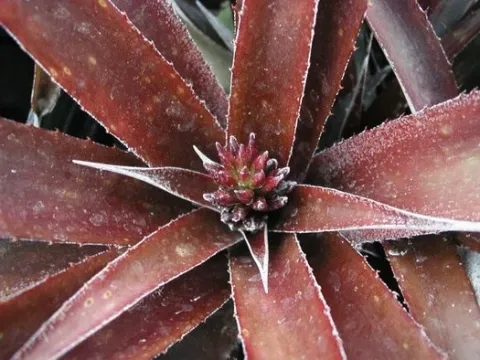
Botanically, the plant is characterized by a rosette growth habit consisting of elongated, often stiff, and serrated leaves. Depending on the hybrid variety, the foliage can exhibit a range of colors, including vibrant green, metallic bronze, or deep purple hues, which develop under optimal lighting conditions.
To ensure healthy growth, Cryptbergia requires bright, indirect light; excessive exposure to direct afternoon sun can damage the foliage tissue, while low light leads to leggy growth and loss of pigmentation. A consistent ambient temperature between 20°C and 25°C is ideal for maintaining its metabolic activity.
Soil requirements for this plant are centered on excellent drainage and aeration. A substrate consisting of orchid bark, peat moss, perlite, and charcoal is recommended to mimic the epiphytic conditions of its natural ancestry. The substrate must never remain waterlogged, as this is detrimental to root health.
The agronomic management involves a specialized watering technique where water is primarily introduced into the central cup of the rosette. Furthermore, it is essential to flush the cup periodically to prevent mineral buildup and bacterial growth, maintaining a clean environment for the plant to thrive.
Common threats to Cryptbergia include fungal pathogens such as Pythium and Phytophthora, which typically develop in cold, waterlogged soil conditions. These pathogens cause crown rot, a condition that is often fatal if not diagnosed and corrected early by improving drainage and reducing irrigation.
Pest management focuses on controlling sap-sucking insects like mealybugs and scale insects. These pests often congregate in the crevices of the leaf bases, making them difficult to detect. Regular inspection and the application of neem oil or systemic insecticides are effective strategies for maintaining plant health and vigor.