
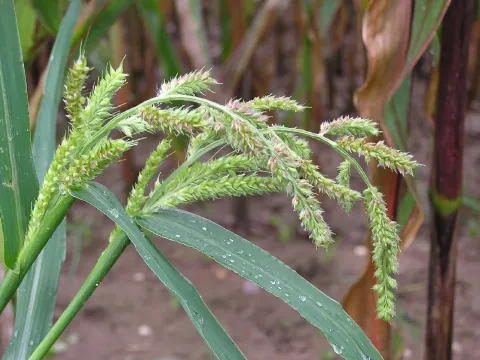
Crow-foot barnyard grass
Echinochloa macrocorvi
Crow-foot barnyard grass is a thermophilic annual cereal that requires soil temperatures to reach at least 12–15 degrees Celsius for successful germination.
What the section contains
Crow-foot barnyard grass
The optimal sowing period is late spring, once the risk of late-season frosts, which can damage emerging seedlings, has passed completely.
Seeds should be sown at a depth of 2 to 4 centimeters, ensuring they are placed in firm contact with the moist soil layer for consistent emergence.
The plant exhibits high germination vigor, allowing it to rapidly establish itself and outcompete weed species in the field during the early growth stages.
Seeding rates are adjusted based on the specific goal: higher densities are preferred for biomass production, whereas lower densities are used for seed multiplication.
Belonging to the Poaceae family, this grass thrives in warm climates and requires ample sunlight to reach its maximum productivity during the growing season.
It prefers fertile, well-draining soils with good moisture retention, though it is notably tolerant of temporary waterlogging conditions common to the Echinochloa genus.
Nitrogen availability is a critical factor, as this nutrient drives the rapid vegetative development that the species is known for in intensive agricultural systems.
The ideal soil types include loams and managed alluvial soils that maintain a neutral to slightly acidic pH, supporting healthy root development.
Regular maintenance and nutrient management throughout the season allow the crop to maximize its biomass potential under various environmental conditions.
The primary agricultural use of crow-foot barnyard grass lies in forage production, serving as a reliable source of nutrition for livestock.
The green biomass is highly suitable for ensiling or haylage, providing a vital source of energy and protein during periods of pasture dormancy.
Overall yield is heavily dependent on management practices, particularly the strategic application of fertilizers and efficient irrigation where necessary.
Seeds can also be incorporated into livestock feed rations, as they provide a balanced nutrient profile when processed correctly.
With appropriate agronomic support, the crop can yield multiple cuts within a single growing season in warmer, high-rainfall regions.
Common agricultural threats include fungal diseases such as smut or various leaf spots, which thrive in conditions of high humidity and poor air circulation.
Pests like aphids and cereal flies can impact the crop's vigor, requiring constant monitoring throughout the vegetative phase to minimize damage.
Preventative measures, such as implementing a diverse crop rotation, are essential to disrupt the life cycles of pests and soil-borne pathogens.
Chemical intervention should be used sparingly and only when damage thresholds are met to protect both the yield and the local ecosystem.
Regular scouting of the fields is recommended to detect any early signs of infestation and to apply targeted control strategies effectively.
For high-quality forage, harvesting should occur before the flowering stage to ensure the nutritional density of the plant is at its peak.
Early harvesting prevents the stems from becoming lignified, which significantly improves both the digestibility and palatability of the forage for livestock.
When producing seeds, harvest should be timed for physiological maturity, indicated by the color change of the seed heads and natural grain drying.
Modern harvesting machinery should be calibrated to handle the small seeds with care to prevent losses during the threshing process.
Post-harvest conditioning, including thorough cleaning and moisture reduction, is critical to ensuring the seeds remain viable for long-term storage.