
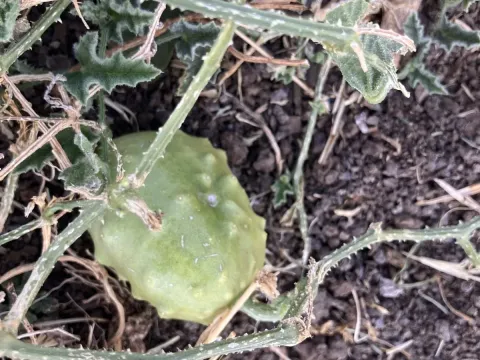
Spiny cucumber
Cucumis aculeatus
Spiny cucumber (Cucumis aculeatus) is a perennial herbaceous climber belonging to the Cucurbitaceae family. It is a wild relative of the common cucumber, characterized by its unique evolutionary adaptations to the tropical climates of East Africa.
What the section contains
Spiny cucumber
The plant originates from the savannas and woodland fringes of Eastern Africa. In its native habitat, it functions as a vigorous climber, utilizing its tendrils to scale shrubs and other vegetation to reach sunlight and maximize its growth potential.
Botanically, it is recognized by the distinct, stiff prickles covering its fruit and stems, a feature that provides protection against herbivores. The foliage consists of palmately lobed leaves, and the flowers are typical of the genus, appearing as yellow, unisexual blossoms.
Climatic requirements are strictly tropical, necessitating consistent warmth and high solar radiation. The plant is extremely frost-sensitive and thrives best in environments where temperatures remain stable throughout the growing cycle without significant diurnal fluctuations.
Soil requirements focus on well-drained, nutrient-rich mediums with a neutral to slightly acidic pH. Given its vigorous nature, providing adequate space and a sturdy trellis is essential for the plant to achieve its full vegetative capacity.
The species is susceptible to various fungal pathogens, with powdery mildew being the most prevalent. High relative humidity and poor air circulation are the primary drivers of fungal outbreaks that can compromise foliage health.
Insect pests, specifically spider mites and aphids, represent a constant threat. These pests tend to congregate on the underside of the leaves, drawing sap and causing significant stress to the plant, especially during prolonged dry spells.
Managing threats involves regular inspection of the leaf surface and maintaining proper plant spacing to ensure adequate airflow. Integrated pest management strategies are highly effective for maintaining the health of this cucurbit species.
Soil-borne nematodes can pose a severe risk to the root system, potentially limiting the plant's ability to uptake water and nutrients. Proper site preparation and the avoidance of contaminated soil are critical components of a successful cultivation program.
Lastly, the presence of various viral diseases can lead to stunting and malformation of the fruit. Controlling insect vectors like aphids is the most efficient way to prevent the spread of these pathogens within a planting site.