
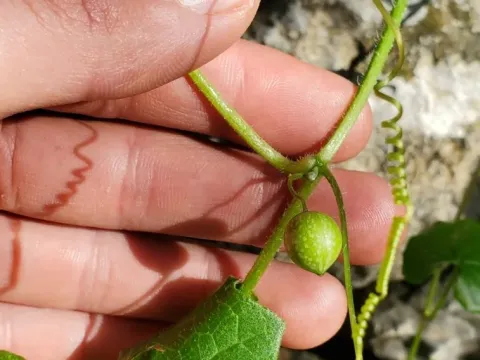
Syrian bryony
Bryonia syriaca
Syrian bryony (Bryonia syriaca) is a perennial herbaceous vine belonging to the Cucurbitaceae family. It is native to the Middle East, specifically thriving in the varied landscapes of Syria, Lebanon, and parts of the Eastern Mediterranean basin.
What the section contains
Syrian bryony
The plant features a climbing habit, using tendrils to ascend over natural supports. It is characterized by its large, tuberous roots that function as storage organs, allowing the plant to remain dormant during harsh weather and sprout vigorously when conditions improve.
Regarding soil requirements, Syrian bryony prefers loose, well-drained loams. It thrives in soils that are rich in organic matter but requires excellent drainage to prevent root rot, as its tuberous structure is sensitive to waterlogged conditions.
The climate optimal for this species is Mediterranean, characterized by mild, wet winters and warm, dry summers. It is quite drought-tolerant once established, thanks to its deep root system which taps into subsoil moisture levels.
In terms of agricultural use, this plant is primarily valued for its phytochemical content. While it is rarely grown as a staple crop, its medicinal properties and chemical compounds make it a subject of interest for small-scale specialty cultivation in pharmaceutical research.
Powdery mildew is the most prevalent disease affecting Syrian bryony, especially in environments with high humidity and poor air circulation. It manifests as a white, dusty growth on the foliage that significantly weakens the plant.
Root rot, often caused by pathogenic fungi such as Pythium or Phytophthora, is a critical threat during wet seasons. Constant moisture in the root zone leads to decay, which is often irreversible if not treated early.
Aphids are the most frequent insect pests, clustering on the undersides of leaves and on tender new shoots. They not only damage the plant by feeding on sap but also act as vectors for various plant viruses.
Spider mites can become a significant issue during dry, hot spells. Their feeding activity causes stippling and yellowing of the leaves, eventually leading to early senescence and reduced vigor of the entire vine.
Management of these threats includes cultural practices such as spacing plants to ensure airflow, implementing proper irrigation schedules, and monitoring foliage regularly to detect the presence of pests or early signs of disease.