
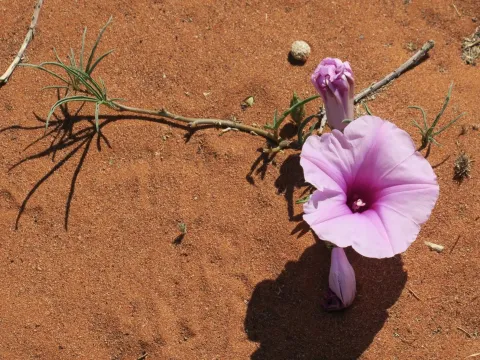
Ipomoea bolusiana
Ipomoea bolusiana
Ipomoea bolusiana is a fascinating perennial plant belonging to the Convolvulaceae family. Its most notable feature is the development of a large, woody underground caudex, which acts as a reservoir for water, allowing the plant to thrive in the harsh environments of Southern Africa.
What the section contains
Ipomoea bolusiana
Native to the arid regions of its range, the plant is evolutionarily adapted to seasonal shifts in precipitation. In its natural habitat, it spends the dry season dormant, with the foliage dying back while the caudex remains hydrated underground.
The cultivation of this species requires full sun exposure. Without adequate light intensity, the plant fails to maintain its compact growth form and may become susceptible to etiolation, significantly weakening the structure of the caudex over time.
The soil must be highly porous and inorganic. A professional succulent mix, composed of volcanic rock, pumice, and minimal organic peat, is ideal. This ensures that irrigation water passes through the pot rapidly, preventing root and caudex asphyxiation.
The agricultural practice for this species focuses on managing the dormant phase. As temperatures drop and daylight hours shorten, the plant enters a period of rest; irrigation must be restricted or completely withheld until signs of new growth appear in spring.
Root and caudex rot caused by overwatering is the primary threat to the health of Ipomoea bolusiana. Once the caudex tissue begins to rot, the plant is difficult to save, making soil drainage the most important aspect of its maintenance.
Spider mites are common pests that thrive in the dry environments where Ipomoea is usually kept. These pests feed on the leaves, causing stippling and eventual leaf drop if left unchecked, further weakening the plant's photosynthetic capacity.
Mealybugs can also infest the plant, hiding in the crevices of the caudex or the base of the stems. Their presence is often detected by a white, cottony substance, which requires immediate treatment with systemic insecticides to prevent severe damage.
Poor ventilation can lead to fungal issues, particularly if the plant is kept in a humid greenhouse environment. Ensuring constant airflow around the plant helps keep the foliage dry and prevents the spread of fungal pathogens.
To ensure plant longevity, integrate regular health inspections of the caudex surface. Any signs of soft, discolored, or mushy areas should be treated by removing the affected tissue and allowing the plant to dry out completely.