
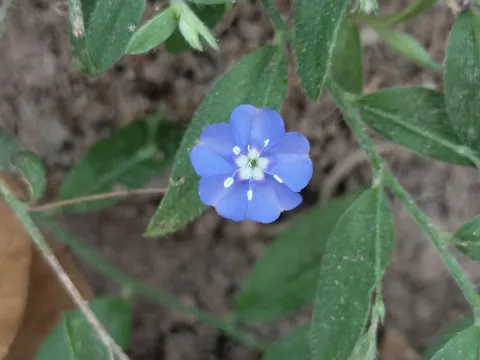
Evolvulus alsinoides
Evolvulus alsinoides
Evolvulus alsinoides is a perennial herb belonging to the Convolvulaceae family. Unlike many of its relatives which are climbing vines, this species typically grows as a small, prostrate, or spreading subshrub with tiny, bright blue flowers.
What the section contains
Evolvulus alsinoides
The plant originates from tropical and subtropical regions of Asia, Africa, and Australia. It is naturally adapted to dry, stony soils and open grassy areas, showing remarkable resilience to high temperatures and intense sunlight.
In terms of soil requirements, it thrives in sandy, light, and well-drained substrates. Because of its drought tolerance, it does not require frequent irrigation, provided that the soil structure ensures quick drainage to avoid waterlogging and root issues.
The species requires a climate with significant warmth to flourish. It is sensitive to frost, which limits its cultivation as a perennial to frost-free zones, while in cooler climates, it must be grown as an annual crop or in greenhouses.
Economic importance of the plant is primarily tied to traditional medicine, where it is utilized for its reported nootropic and health-boosting properties. Cultivation for industrial use requires careful harvesting of aerial parts to preserve active compounds.
The main threats to Evolvulus alsinoides crops are related to fungal pathogens, particularly when the crop is subjected to overly moist conditions or high humidity. Root rot is a common issue that can destroy plant stands quickly.
Insect pests such as aphids and leaf-eating beetles can damage the foliage. Due to the fine hairs on the leaves, the plant is sometimes susceptible to infestations that are difficult to manage without proper monitoring.
Crop management practices should emphasize soil aeration and proper spacing to allow sufficient air movement between plants, which is the most effective way to prevent the spread of fungal diseases.
Integrated pest management (IPM) is recommended to control insect populations without compromising the quality of the harvested medicinal material, prioritizing biological control methods whenever possible.
Maintaining a clean field, including weed control, helps minimize the prevalence of disease vectors and ensures that the Evolvulus alsinoides plants have optimal resources to develop their secondary metabolites.