
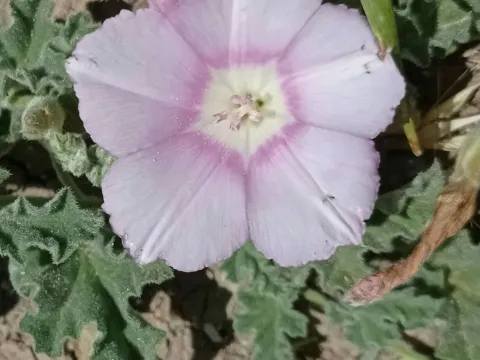
Galatian bindweed
Convolvulus galaticus
Galatian bindweed (Convolvulus galaticus) is a distinct perennial plant species belonging to the Convolvulaceae family. It is native to the rocky and mountainous habitats of the Galatia region in central Anatolia, Turkey.
What the section contains
Galatian bindweed
The plant is adapted to specialized soil conditions, requiring well-drained, porous substrates. It thrives in gravelly or sandy soils that mimic the natural conditions of its native alpine screes and slopes.
Climate requirements involve high levels of solar radiation and low relative humidity. As a heliophilous species, it requires full sun exposure to maintain its compact growth form and to trigger the blooming process.
Irrigation must be strictly controlled in garden settings. The plant demonstrates high drought tolerance, but excessive moisture levels in the rhizosphere can lead to physiological stress and reduced vigor.
Botanically, it is recognized by its silver-hued, slender foliage and trumpet-shaped flowers. It serves primarily as an ornamental specimen, particularly suited for xeriscaping, rock gardens, and dry-wall plantings.
The primary threats to Convolvulus galaticus involve various root rots caused by poor soil drainage. When the soil remains waterlogged, the roots become vulnerable to fungal colonization.
Powdery mildew is a common foliar problem, especially in areas where air circulation is restricted. The fungus creates a dusty coating on the leaves, which inhibits the plant's photosynthetic capacity.
Insects like spider mites can be a concern in hot and dry climates. They often colonize the underside of the leaves, resulting in stippling and eventual chlorosis of the foliage if left untreated.
Aphids are another frequent pest that target the terminal growth points. These pests excrete honeydew, which can further attract secondary fungal infections such as sooty mold.
Integrated pest management strategies focusing on mechanical removal and the maintenance of optimal environmental conditions are highly recommended to preserve plant health without excessive chemical intervention.