
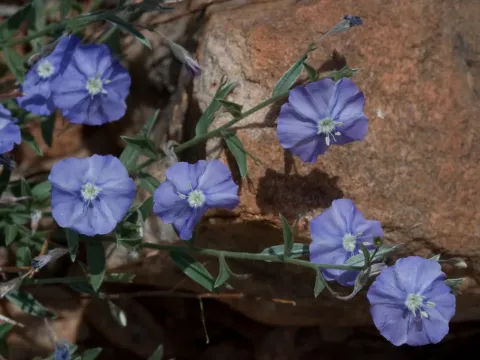
Evolvulus
Evolvulus L.
Evolvulus (Evolvulus L.) is a genus belonging to the Convolvulaceae family. Unlike many other members of this family, these plants are low-growing, sprawling, or shrubby perennials rather than climbing vines.
What the section contains


Evolvulus
Originating from tropical and subtropical areas of the Americas, these plants thrive in warm climates. They require full sun exposure to maintain their compact growth habit and produce an abundance of their characteristic blue flowers.
The ideal soil for Evolvulus is sandy, well-draining, and slightly acidic to neutral. Heavy clay soils should be avoided or amended with organic matter and grit to prevent root rot, which is the primary cause of plant failure.
While the plant exhibits significant drought tolerance once established, it performs best with consistent, moderate irrigation. During peak summer heat, regular watering is essential to prevent wilting and promote continuous blooming.
Cultivation practices involve deadheading to encourage further flower production and trimming stems to maintain shape. In regions with cold winters, Evolvulus is often grown as an annual or overwintered indoors in pots.
Root rot is the most serious threat to Evolvulus, caused primarily by poor drainage or overwatering. Maintaining a porous soil structure is the best preventive measure against soil-borne pathogens.
Spider mites are a common pest in hot and dry conditions. They colonize the undersides of leaves, causing a stippled appearance and eventual leaf drop, which can be mitigated by increasing humidity or using miticides.
Aphids tend to cluster on soft, new growth and flower buds. These insects weaken the plant by extracting sap and can facilitate the transmission of viral diseases, necessitating early detection and control.
Whiteflies can become problematic in greenhouses or sheltered outdoor environments. Management involves the use of yellow sticky traps and horticultural oils to disrupt the insect's life cycle.
Powdery mildew may develop if the plant is kept in overly humid conditions with poor air circulation. Proper spacing and location selection are essential to ensure adequate airflow around the foliage.