
Giant dodder
Cuscuta gigantea
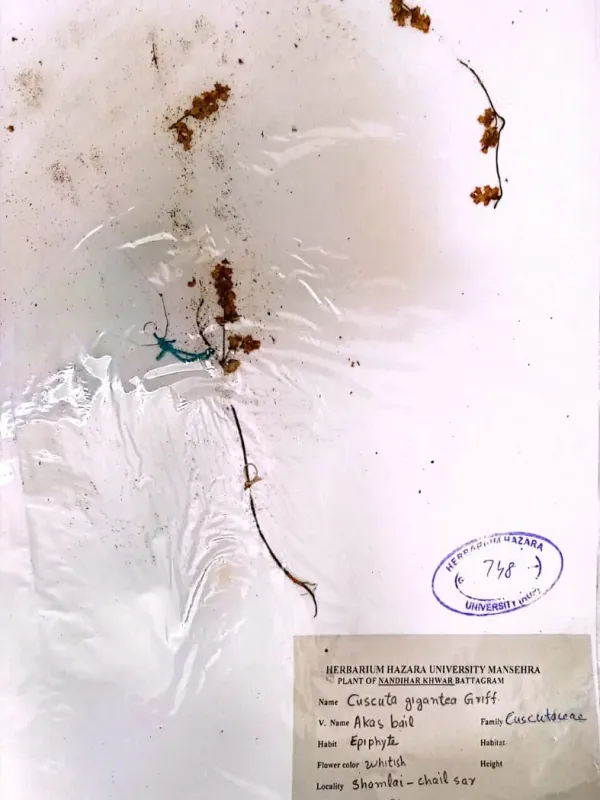
Description
Growing requirements
Giant dodder, or Cuscuta gigantea, is a parasitic plant belonging to the Convolvulaceae family. It is distinct due to its large stems and aggressive growth habit, making it a severe threat to cultivated flora and shrubs.
Originating from arid regions, this species is well-adapted to high-temperature environments. It lacks chlorophyll and relies entirely on its hosts for essential water, nutrients, and carbohydrates via haustorial connections.
The plant requires suitable host species to thrive. It commonly parasitizes woody plants and tall herbaceous crops, encircling them with thick, succulent stems that can grow several meters long within a single season.
Soil conditions are secondary once the parasite has successfully attached to the host. However, the initial germination phase is dependent on specific soil moisture and temperature thresholds common in its native range.
Agricultural management is primarily preventative. Growers must ensure the use of certified seed lots and implement strict quarantine protocols to prevent the movement of contaminated equipment or soil into unaffected production areas.
Main diseases and pests
The main threat posed by Cuscuta gigantea is crop mortality and loss of yield quality. By diverting nutrients from the host plant, it severely stunts growth and reduces the physiological capacity of the crop.
It acts as a primary vector for numerous plant viruses. The haustoria provide a direct bridge for viral pathogens to enter the host's vascular system, often leading to systemic infections that are impossible to cure.
There are very few natural pests that control giant dodder effectively. Integrated pest management (IPM) strategies emphasize early detection and manual removal of infested stems before the plant produces its flowers and seeds.
Chemical control remains difficult due to the physiological intimacy between the dodder and the host plant. Selective herbicides are often employed, but they require precise application to avoid harming the primary crop.
Seed persistence in the soil is a major concern. The seeds can remain dormant for many years, necessitating long-term monitoring of the field even after the visible population of the parasite has been eradicated.