
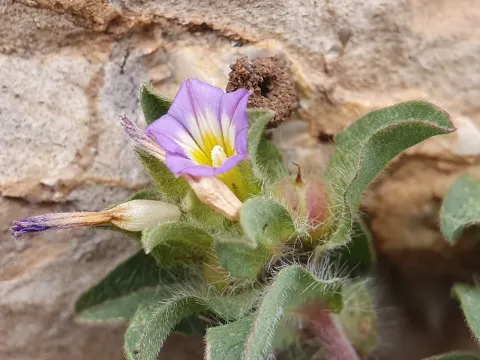
Dwarf bindweed
Convolvulus humilis
Dwarf bindweed is a warm-season annual that requires stable, warm temperatures to germinate, making late spring the ideal time for direct outdoor sowing.
What the section contains
Dwarf bindweed
Gardeners typically wait until the risk of frost has completely passed, usually from late April to mid-May, to ensure optimal soil temperature for rapid emergence.
Seeds should be sown shallowly, at a depth of about 1 to 2 centimeters, in well-prepared, loose soil to prevent them from struggling to break through the surface.
For those living in regions with shorter summers, starting seeds indoors in containers during March is a recommended strategy to ensure early and prolonged flowering.
Adequate spacing, generally 20 to 30 centimeters apart, is essential during sowing to allow each plant enough space to develop into a bushy, healthy form.
The plant thrives in full sun, as it requires high light intensity to maintain its compact growth habit and produce an abundance of its characteristic funnel-shaped flowers.
Soil quality should be light and sandy or loamy with excellent drainage, as the species is highly sensitive to waterlogged conditions that can cause root rot.
While dwarf bindweed displays moderate drought tolerance once established, consistent watering during dry spells is necessary to keep the foliage vibrant and flowering active.
Neutral soil pH is preferred for this species to ensure the balanced availability of minerals needed for healthy stem development and consistent bloom production.
Avoid excessive use of high-nitrogen fertilizers, which tend to encourage overly lush foliage at the expense of floral development, potentially weakening the plant structure.
Powdery mildew is a common fungal threat, especially in humid conditions or in overcrowded planting areas where air circulation is significantly restricted.
Root rot remains a primary concern for gardeners, typically resulting from overly frequent irrigation or heavy, poorly draining soils that prevent the roots from breathing.
Aphids are the most frequent insect pests, often gathering on tender growth tips and buds, which can lead to stunted growth and damage to developing flowers.
Spider mites may infest the plants during particularly hot and dry periods, causing leaf discoloration and a general decline in the plant's health and aesthetic appeal.
- Ensuring proper spacing to improve air circulation.
- Monitoring soil moisture to prevent waterlogging.
- Using appropriate fungicide and insecticide applications when necessary.