
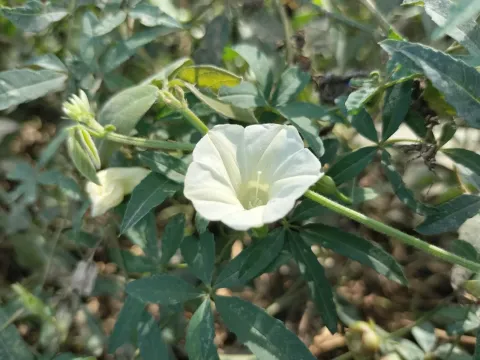
Distimake
Distimake Raf.
Sowing of Distimake for industrial or research purposes is primarily carried out in the spring period, once the soil has warmed up to 18-22 degrees Celsius.
What the section contains

Distimake
The seeds require pre-sowing scarification to improve germination rates, as they possess a dense seed coat characteristic of many Convolvulaceae species.
In subtropical climates, direct seeding is feasible, but in temperate zones, the seedling method in protected greenhouses is highly recommended.
Planting density must account for the trailing habit of the plant; therefore, an optimal spacing of at least 50 by 70 centimeters is necessary to ensure healthy vegetative growth.
Seed planting depth typically ranges from 1 to 2 centimeters, and maintaining moderate moisture levels in the substrate until emergence is crucial.
Distimake is a thermophilic crop that requires significant sunlight for full development of its vines and the formation of flower clusters.
The plant prefers loose, well-drained soils with a neutral or slightly acidic pH, as water stagnation in the root zone can trigger rot development.
During the active growth phase, the crop requires regular but moderate irrigation, avoiding waterlogging, especially during the flowering stage.
A key factor for successful cultivation is the provision of support structures, as most Distimake species are climbing vines that require vertical development.
The plant does not tolerate sharp temperature fluctuations or frosts, necessitating management strategies that provide a stable microclimate.
Primary pests threatening this crop include spider mites and aphids, which frequently target the delicate young shoots of the plant.
Under conditions of high humidity, Distimake becomes susceptible to fungal infections such as powdery mildew and anthracnose.
Disease management strategies involve preventive applications of contact fungicides and strict adherence to crop rotation practices on the field.
The root system may be damaged by soil nematodes, making pre-planting soil fumigation or disinfection highly recommended in areas of cultivation.
Regular sanitary pruning of damaged vine segments helps minimize the spread of infections and improves the plant's overall resilience to environmental stressors.