
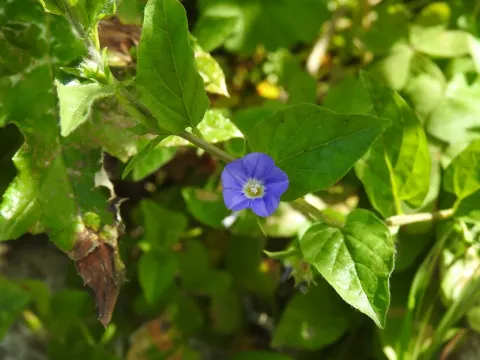
Sicilian bindweed
Convolvulus siculus
Convolvulus siculus, commonly known as Sicilian bindweed, is an annual herbaceous plant belonging to the Convolvulaceae family. Sowing is typically performed in late spring once the soil has warmed up significantly.
What the section contains
Sicilian bindweed
Seeds should be sown at a shallow depth of approximately 0.5 to 1 centimeter to ensure they receive enough warmth and light to germinate effectively within the native range.
In regions with cooler climates, starting seeds indoors in biodegradable pots is recommended about five weeks before the last frost date to ensure an earlier flowering stage.
The spacing between plants should be carefully managed, aiming for 20 centimeters apart to allow for proper airflow and space for the trailing vines to develop.
Care must be taken during the initial germination phase to keep the seedbed moist without causing waterlogging, as the seeds require consistent humidity to break dormancy.
This species thrives in full sun exposure, which is essential for maximizing flower production and maintaining the compact, healthy growth habit of the plant.
Well-drained soil is a primary requirement for the successful cultivation of this species. It is highly adaptable to poor, stony, or sandy soils typical of Mediterranean environments.
The plant demonstrates remarkable drought tolerance once established, making it a sustainable choice for water-restricted agricultural areas or xeric landscapes.
Regarding soil fertility, it prefers lean substrates. Excessive nutrient input, particularly nitrogen, can lead to vegetative overgrowth at the expense of floral development.
Temperature requirements are moderate to warm; it does not tolerate hard frosts, so it must be treated as a purely seasonal crop in temperate climate zones.
Powdery mildew is a common threat, particularly in late summer when diurnal temperature fluctuations and humidity levels promote fungal spore development on foliage.
Root rot is the most serious threat, usually caused by improper irrigation practices or soil that remains saturated for extended periods, leading to sudden wilting.
Spider mites represent a significant pest threat, especially during hot and dry spells where they exploit the plant's weakened state to reproduce rapidly on the leaf undersides.
Aphids can cause significant damage by colonizing tender new growth, leading to stunted shoots and potentially transmitting viral diseases across the crop.
Integrated pest management, including regular crop rotation and the removal of botanical debris, is essential for maintaining the health and vigor of the planting area.