
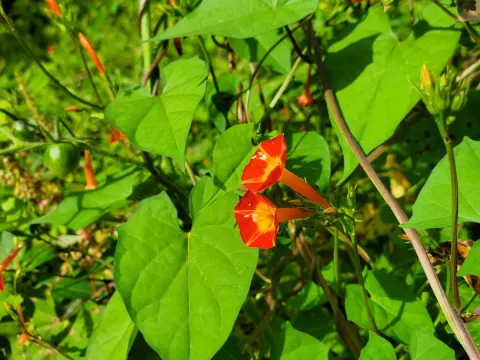
Red morning glory
Ipomoea coccinea
Red morning glory, scientifically known as Ipomoea coccinea, belongs to the Convolvulaceae family. It is a vigorous, fast-growing annual vine native to tropical regions of the Americas, known for its rapid vertical expansion.
What the section contains
Red morning glory
For outdoor sowing, it is essential to wait until the soil has thoroughly warmed up in late spring. The seeds require stable temperatures to germinate effectively and will fail in cold, damp conditions.
Starting seeds indoors 4–6 weeks before the last frost date is the preferred method for regions with shorter growing seasons, allowing the plants to establish a strong root system early on.
The seeds have a hard, protective coat that inhibits water absorption. To speed up the germination process, nicking the seed coat slightly or soaking the seeds in tepid water overnight is highly recommended.
Transplanting seedlings should be done with extreme care. Since the plant dislikes root disturbance, using biodegradable pots that can be placed directly into the ground is the most effective approach.
The plant thrives in full sun exposure. To ensure prolific blooming and healthy foliage, it should be positioned in a location that receives at least six to eight hours of direct sunlight daily.
Well-draining, moderately fertile soil is ideal for this climber. While it is adaptable to various soil types, it performs best in loose, sandy loam that prevents water from pooling around the crown.
As a tropical vine, it is highly sensitive to cold temperatures and frost. It requires a warm, sheltered environment to reach its full potential, with day temperatures consistently above 20 degrees Celsius.
Providing a sturdy support structure is a mandatory requirement of its cultivation. Whether using a trellis, wire mesh, or string, the plant needs a vertical medium to support its vigorous climbing habit.
Watering should be consistent throughout the summer months. While the plant can tolerate short dry spells, regular moisture is necessary to maintain its rapid growth rate and ensure vibrant floral production.
Aphids are common pests that tend to cluster on the new, tender shoots of the plant. If left untreated, they can cause stunted growth and curling of the leaves due to their sap-sucking activity.
Spider mites can become a significant issue during periods of hot, dry weather. They feed on the underside of leaves, causing a stippled appearance and eventually leading to yellowing or leaf drop.
Powdery mildew is the most frequent fungal disease, often triggered by high humidity levels or poor air circulation around the dense foliage of the vine, especially in shaded or crowded garden spots.
Root rot is typically associated with poor drainage or overwatering. Maintaining soil aeration and ensuring excess water can easily drain away is the best preventative measure against soil-borne pathogens.
- Monitor leaf undersides frequently for early signs of mite infestation.
- Ensure adequate spacing between plants to improve airflow.
- Apply organic insecticidal soaps if aphids or mite populations exceed acceptable levels.