
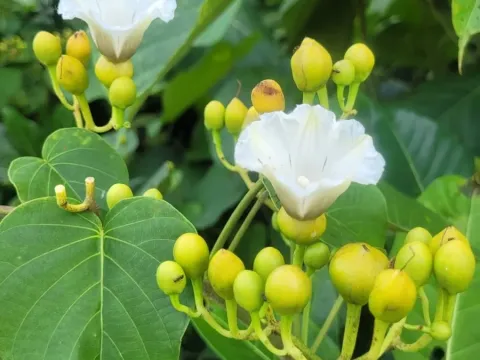
Decalobanthus
Decalobanthus
Decalobanthus is a genus of flowering plants belonging to the Convolvulaceae family. As a vigorous climbing vine, its propagation starts with high-quality seeds that typically require scarification to overcome physical dormancy of the seed coat.
What the section contains

Decalobanthus
The sowing process should be initiated in a warm, controlled environment. Seeds are placed in a light, well-draining substrate, ensuring they are covered with a thin layer of soil to maintain consistent moisture levels without waterlogging.
Optimal germination temperatures range between 22°C and 28°C. Once the seedlings emerge, they demonstrate rapid development, necessitating early installation of structural supports to facilitate the natural climbing habit of the plant.
In a professional nursery setting, seedlings are often transplanted into individual containers once the first true leaves have matured. This stage allows for better root development before moving the plant to its final growth location.
Consistent care during the early stages of establishment is critical for ensuring the longevity of the vine, as the young plant is highly sensitive to abrupt environmental fluctuations.
Decalobanthus thrives under conditions of high solar radiation, making it an excellent candidate for sunny, open areas. In indoor or greenhouse settings, providing maximum available light is essential for healthy foliage production.
The soil structure must be porous, typically a mixture of sand and organic matter, to prevent root rot. The plant prefers slightly acidic to neutral soil conditions which allow for efficient nutrient uptake and root aeration.
Temperature management is a primary constraint; as a tropical origin plant, it requires consistent warmth. It is intolerant to frost and cold drafts, meaning cultivation must occur in protected environments in temperate zones.
Watering requirements follow a cycle of saturation and partial drying. While the plant benefits from regular moisture, stagnant water in the root zone is a common cause of failure in cultivation programs.
Nutrient supply should be moderate, focusing on balanced NPK formulations. Over-fertilization, especially with nitrogen, can lead to excessive vegetative growth at the expense of structural integrity and flowering.
Fungal diseases, particularly those affecting the root and collar regions, represent the most significant threat to Decalobanthus health. Poor drainage and high humidity act as catalysts for these pathogenic infections.
Common insect pests include sap-sucking insects such as aphids and spider mites. These pests thrive in dry environments and can quickly weaken the plant by draining its nutrient reserves if left unmanaged.
Integrated pest management (IPM) is highly recommended for Decalobanthus cultivation. This involves the combination of biological controls and the strategic, limited use of pesticides to minimize chemical impact.
Good air circulation is a primary preventative measure against most foliage diseases. By ensuring that plants are not overcrowded, the risk of pathogen transmission is significantly reduced.
Regular inspections and the removal of yellowed or damaged tissue allow for early detection of issues, ensuring that the plant remains vigorous throughout its entire life cycle.