
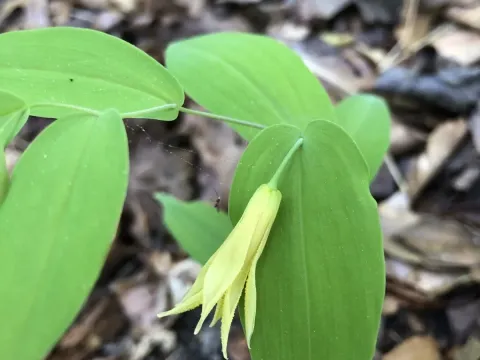
Perfoliate bellwort
Uvularia perfoliata
Uvularia perfoliata, commonly known as perfoliate bellwort, is a herbaceous perennial belonging to the Colchicaceae family. It is distinct for its stem which appears to pass through the bases of the leaves, creating a unique visual effect in woodland landscapes.
What the section contains
Perfoliate bellwort
Native to the eastern regions of North America, this plant thrives in moist, deciduous woodlands. When grown in gardens, it requires a setting that closely mimics its natural habitat, emphasizing partial to full shade and rich, organic soil.
Soil requirements involve a well-drained but moisture-retentive substrate, preferably with a slightly acidic to neutral pH level. Dry conditions are detrimental to the plant, so maintaining consistent soil moisture is critical for its survival and proliferation.
Regarding cultural practices, Uvularia perfoliata benefits from an annual layer of leaf mold or compost applied as mulch. This practice not only provides necessary nutrients but also protects the delicate roots from temperature fluctuations and prevents excessive drying.
The plant is hardy and well-adapted to moderate climates. It is typically propagated through division of the rhizomes in early spring or autumn, allowing gardeners to establish colonies in shaded borders or native plant gardens over time.
Perfoliate bellwort is generally robust, but it can suffer from root rot if the soil remains waterlogged for extended periods, especially during humid summers.
Slugs and snails are the primary pests that damage the foliage, often consuming large portions of leaves during the early growing season.
Effective management includes maintaining clean growing areas and utilizing manual or organic barriers to deter mollusks from accessing the stems.
If fungal issues arise, improving air circulation around the plants and amending the soil drainage are the most effective non-chemical interventions.
The species is rarely impacted by major agricultural pests, making it an excellent, low-maintenance choice for shade-loving perennial collections.