
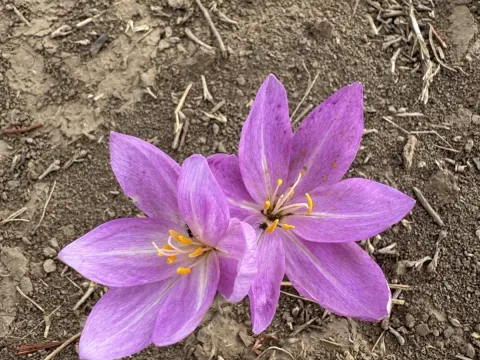
Meadow saffron
Colchicum laetum
Meadow saffron (Colchicum laetum) is a perennial plant species belonging to the Colchicaceae family. It is distinguished by its unique corm-based development and is native to the steppe and foothill regions of the Caucasus and parts of Eastern Europe.
What the section contains
Meadow saffron
The plant thrives in well-lit areas with fertile, sandy-loam soils that offer excellent drainage. Proper soil aeration is crucial to prevent the corms from rotting during the dormant season, which is their most vulnerable phase.
Agrotechnical management involves respecting the natural cycle of the plant. Since it exhibits a split growth pattern with leaves appearing in spring and flowers blooming in autumn, soil moisture must be carefully managed to ensure the corms stay dry during the summer rest.
It is a highly hardy species, capable of surviving temperature fluctuations. However, for cultivation purposes, maintaining a steady soil environment is recommended to support robust blooming in the late season.
In professional landscaping and herb cultivation, it is valued for its hardiness and ability to bloom when other vegetation begins to fade. It is essential to handle this plant with caution as it is toxic if ingested.
Fungal infections, particularly various types of basal rot, are the primary disease threats to the plant. These often stem from improper drainage or excessive irrigation during the dormant summer period.
Slugs and snails are major pests that target the foliage in early spring. Regular monitoring and the application of organic bait or traps are recommended to protect the emerging vegetative growth.
Root mites can infest the base of the corms, leading to stunted growth and yellowing of the leaves. Treating the planting material with acaricides or hot-water dips can mitigate this risk effectively.
Nematode infestations can cause severe distortion of the plant structure. Avoiding repeated planting in the same location and using certified clean stock are the best strategies to maintain a healthy garden patch.
Rodents such as voles can damage the corms over winter, often leading to total loss of the planting. Installing physical barriers like wire mesh around the bulbs is a standard protective measure in regions with high rodent activity.