
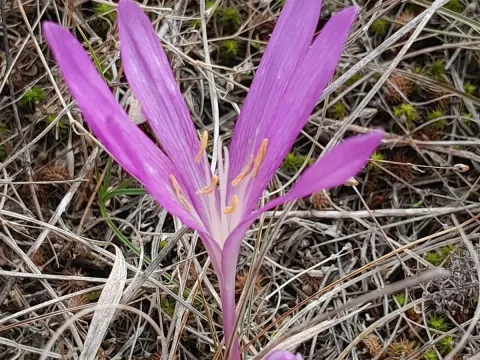
Sand crocus
Colchicum arenarium
The Sand Crocus (Colchicum arenarium) is a bulbous perennial belonging to the Colchicaceae family. Naturally adapted to sandy, steppe-like soils, this plant has specific requirements for cultivation in garden and agricultural settings.
What the section contains
Sand crocus
Propagation is typically achieved by dividing mature corms during the summer dormancy period. This allows the plant to establish roots in the cool autumn soil before the winter dormancy sets in, ensuring optimal growth for the following season.
Corms should be planted at a depth of approximately 10–15 centimeters. Spacing is crucial; maintaining at least 20 centimeters between plants ensures sufficient airflow and reduces the competition for nutrients in the soil.
Seed propagation is possible but slow, as it requires specialized stratified conditions. Seeds sown in autumn may take several years to produce their first flowers, making this method primarily useful for breeding or naturalizing programs.
Understanding the life cycle is key to cultivation: leaves emerge in early spring, the foliage withers by mid-summer, and the flowers appear in autumn without leaves. This unique pattern must be respected in all maintenance activities.
Well-draining soil is the most critical requirement for the Sand Crocus. As the name suggests, it thrives in sandy, loose substrates. Heavy clay soils must be amended with grit or sand to prevent water stagnation, which is fatal to the corms.
The plant performs best in full sun. While it can tolerate partial shade, insufficient light will result in weak foliage and reduced flowering. A location with good air circulation is also beneficial for preventing fungal infections.
This species is highly cold-hardy, having evolved in temperate steppe regions. It does not require winter protection, provided that the soil drainage is sufficient to keep the corms dry during wet winter months.
Soil pH should ideally be neutral or slightly alkaline. If the soil is excessively acidic, adding agricultural lime can improve nutrient availability and overall vigor, ensuring a robust display of autumn blooms.
Watering management is essential: provide moisture during the spring foliage growth phase, but keep the soil relatively dry throughout the summer dormancy. Excess water in summer is the most common cause of corm rot.
Fungal diseases, particularly grey mould (Botrytis), pose a significant threat during periods of high humidity. Proactive measures include avoiding overhead watering and ensuring the soil surface dries quickly after rains.
Slugs and snails are the primary pests that damage the spring foliage. Regular monitoring and the use of physical barriers or targeted bait can protect the young leaves, which are vital for storing energy for the autumn bloom.
Corm-boring insects, such as wireworms, can damage the base of the bulbs. Soil preparation and the use of preventative treatments at planting time can help reduce the population of these pests in the root zone.
Viral infections can cause stunting and leaf distortion. Since there is no cure, infected plants must be removed and destroyed immediately to prevent the spread of the virus through aphids or shared garden tools.
Proper storage of harvested corms is vital to prevent Fusarium rot. Keeping them in a cool, dry, and well-ventilated area until planting ensures that the material remains healthy and free from fungal pathogens.