
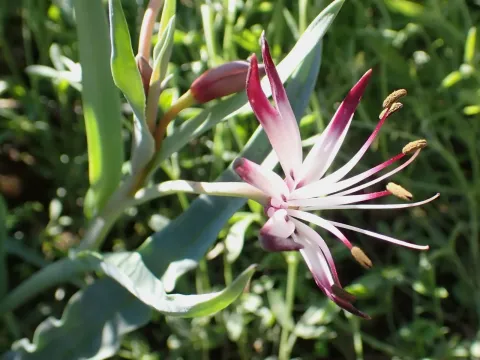
Ornithoglossum
Ornithoglossum
Ornithoglossum is a genus of perennial bulbous plants belonging to the Melanthiaceae family. These plants are native to the arid and semi-arid regions of Africa, where they have evolved to thrive in specific environmental niches characterized by distinct seasonal cycles.
What the section contains

Ornithoglossum
The successful cultivation of Ornithoglossum requires well-draining, gritty, or sandy soils. Because these plants are highly susceptible to bulb rot, maintaining an environment that prevents waterlogging is the most critical factor in their management.
In terms of light, the plant demands high levels of sun exposure to sustain its growth cycle. As a plant adapted to open savannah conditions, it does not perform well in shaded or confined environments with low light intensity.
The climate requirements include a distinct period of growth triggered by moisture, followed by a strict dormant period during the dry season. Managing these phases correctly is essential for the plant to produce its characteristic foliage and flowers.
Agricultural techniques for this genus emphasize low-maintenance care. They are adapted to nutrient-poor soils, meaning that excessive fertilization is unnecessary and can potentially harm the plant's delicate root system and hormonal balance.
The primary threats to Ornithoglossum health are fungal diseases, particularly bulb and root rot, which are almost always caused by improper irrigation practices. Maintaining optimal soil moisture is vital for disease prevention.
Pests such as spider mites and various bulb-infesting insects can pose a significant challenge. These organisms tend to target the plant during its active growing phase, leading to stunted development and poor flower quality.
Proactive management of the planting site, including the use of sterilized soil media and proper spacing, can significantly reduce the risk of infestation and infection. Good air circulation is a key factor in keeping the foliage dry and healthy.
If chemical interventions become necessary, it is crucial to use targeted pesticides with extreme caution. The plant's unique physiology may make it sensitive to standard agricultural chemical treatments, requiring careful dosage adjustments.
It is important to emphasize that Ornithoglossum contains toxic compounds. This is a crucial consideration for any grower, as the plant poses a significant poisoning risk to livestock and pets if consumed in significant quantities.