
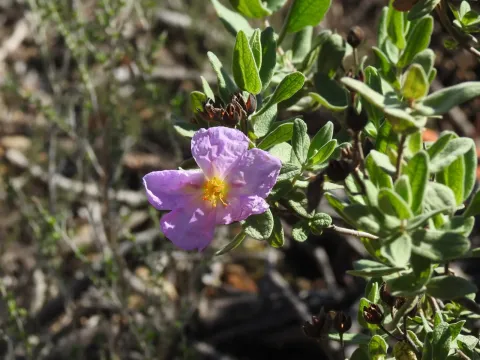
White-leaved rock-rose
Cistus albidus
Seeds of Cistus albidus are typically sown in early spring once the soil has warmed up, usually during March or April, allowing the root system to establish before summer heat.
What the section contains
White-leaved rock-rose
The use of a light, well-draining substrate is critical for successful germination. Seeds benefit from soaking in warm water for several hours to break dormancy.
Propagation via seedlings is common in cooler climates, where young plants are moved to the field once the risk of frost has completely passed.
Sowing depth should be very shallow, as the seeds require exposure to light to trigger germination processes effectively.
Planting density is typically maintained at 60–80 cm intervals, ensuring that each plant has sufficient space for growth and adequate airflow.
Cistus albidus is a Mediterranean plant that thrives in sunny, open locations. It requires high light intensity for optimal growth and resin production.
The plant prefers poor, rocky, or calcareous soils with a neutral or slightly alkaline pH. Drainage is the most important factor in site selection.
High drought tolerance is a hallmark of this species, allowing it to survive long periods without supplemental irrigation in its native environment.
Temperature requirements include moderate summers and mild winters. In areas with harsh frosts, the plant may require winter protection or greenhouse cultivation.
Symbiotic relationships with soil microorganisms play a key role in nutrient absorption, making the plant well-adapted to nutrient-poor soils.
Harvesting usually occurs during the peak flowering stage when the concentration of essential oils and resins in the foliage is at its highest point.
For industrial processing, mechanical harvesting methods are employed, cutting back the plant to encourage regrowth and renewal of the woody structure.
The harvested material must be dried immediately in shaded, well-ventilated areas to preserve the integrity of its aromatic and resinous compounds.
Labdanum, the plant's valuable resin, is extracted through specialized industrial processes, including solvent extraction or steam distillation.
Yield varies significantly based on plant age, soil quality, and weather patterns, with mature plantations providing the most consistent harvests over time.
Leaf-eating insects are among the primary pests that may impact the health of the plants, particularly during periods of intense heat and dry conditions.
Fungal diseases, such as root rot, are almost exclusively related to poor drainage or overwatering, which the plant cannot tolerate under any circumstances.
Powdery mildew can affect the foliage in humid conditions, necessitating proper spacing to ensure that air circulates freely around the plant canopy.
Systemic pests are rare, as the plant's naturally occurring resins act as a biological deterrent against many common threats found in its habitat.
Maintaining high hygiene standards in the field, combined with optimal drainage, is the most effective strategy for preventing disease in Cistus albidus.