
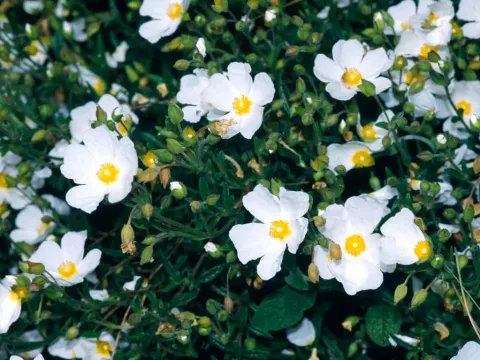
Cistus sahucii
Cistus sahucii
Sowing Cistus sahucii seeds is best performed in late winter or early spring in a greenhouse or controlled environment. The seeds have a hard seed coat and often require stratification to ensure consistent and high-quality germination.
What the section contains
Cistus sahucii
The optimal germination temperature ranges from 18 to 22 degrees Celsius. The growing medium must be light, sandy, and exhibit excellent drainage to prevent damping-off, which is a common risk for young seedlings.
Transplanting into the open field should only happen after the last frost date has passed. Given the plant's sensitivity to root disturbance, it is highly recommended to use biodegradable peat pots that can be planted directly into the soil.
Adequate spacing between plants, typically 60–80 centimeters, is essential for healthy development. Proper spacing promotes airflow, which is critical for preventing fungal issues as the plants mature.
Direct sowing in the garden is possible in warmer regions during mid-spring. However, starting seeds in trays remains the most reliable method for amateur and professional growers alike to ensure better control over early plant development.
Cistus sahucii, a member of the Cistaceae family, is a classic Mediterranean evergreen shrub. It is perfectly adapted to harsh, dry conditions and thrives in environments that receive plenty of direct sunlight.
The plant demands a sunny location. When grown in shade, the shrubs tend to become leggy and lose their compact form, while flower production significantly declines, making the plant more susceptible to opportunistic pathogens.
Soil requirements are relatively minimal. Cistus sahucii excels in poor, rocky, or sandy soils with neutral to slightly acidic pH levels. Good drainage is the most vital factor for the long-term survival of this species.
Watering should be managed carefully. While young plants need regular irrigation to establish their root systems, established shrubs are incredibly drought-tolerant and can survive long periods without additional water.
Routine maintenance includes light pruning immediately after the flowering season. This practice encourages denser growth and prevents the plant from becoming overly woody, maintaining its aesthetic appeal in the garden.
The economic value of Cistus sahucii is derived primarily from its essential oils and the resin known as labdanum. Yield depends largely on planting density and the maturity of the shrubs in the plantation.
Harvesting for essential oil extraction occurs during peak flowering. The glandular hairs on the leaves and stems secrete the highest concentration of aromatic compounds at this stage, which is crucial for oil quality.
Plantations typically reach their peak production potential by the fourth to eighth year. With correct management, these shrubs can remain productive for over a decade, providing a sustainable source of raw materials.
Ornamental yield refers to the plant's visual performance. A well-maintained Cistus sahucii provides extensive coverage and a profusion of blooms, making it a favorite for low-maintenance, water-wise landscaping projects.
Final product output is highly dependent on post-harvest processing efficiency. Rapid distillation or extraction after picking ensures that volatile aromatic compounds are captured rather than lost to evaporation.
Cistus sahucii is naturally robust, but it can struggle in environments with excessive humidity. Root rot is the most serious threat, usually triggered by poor drainage or over-irrigation during the growing season.
Pests are generally a minor concern, though spider mites can appear during prolonged, exceptionally hot, and dry spells. Proper plant health management helps keep these potential threats at bay without chemical intervention.
- Root rot caused by stagnant water or waterlogged soil.
- Powdery mildew in areas with stagnant, humid air.
- Aphids that occasionally target tender new growth in spring.
- Spider mites under high-temperature stress conditions.
Preventative measures focus on site selection and proper spacing. Ensuring that the crown of the plant stays dry and that the soil drains quickly is the most effective way to protect the crop from fungal infections.
If intervention is necessary, opt for biological pest control methods. Since Cistus sahucii attracts pollinators, the use of harsh synthetic pesticides should be avoided to protect the health of the local ecosystem.
Harvesting should take place on clear, sunny days once the morning dew has completely evaporated. This ensures that the essential oils are at their most concentrated state for extraction purposes.
The branches are clipped using sharp tools to ensure clean cuts. In large-scale operations, mechanical harvesters are utilized to increase the efficiency of the collection process across large fields.
Immediate processing or proper drying is essential. If the raw material cannot be distilled immediately, it should be spread in thin layers in a shaded, well-ventilated area to prevent fermentation and loss of quality.
The harvested product must be clean and free of debris to maintain high market standards. Impurities like soil or weeds can degrade the quality of the final essential oil and complicate the extraction process.
Store harvested material in breathable containers away from direct sunlight. High temperatures during storage can cause degradation of the aromatic compounds, reducing the efficacy and value of the harvested crop.