
Stellaria longifolia
Stellaria longifolia
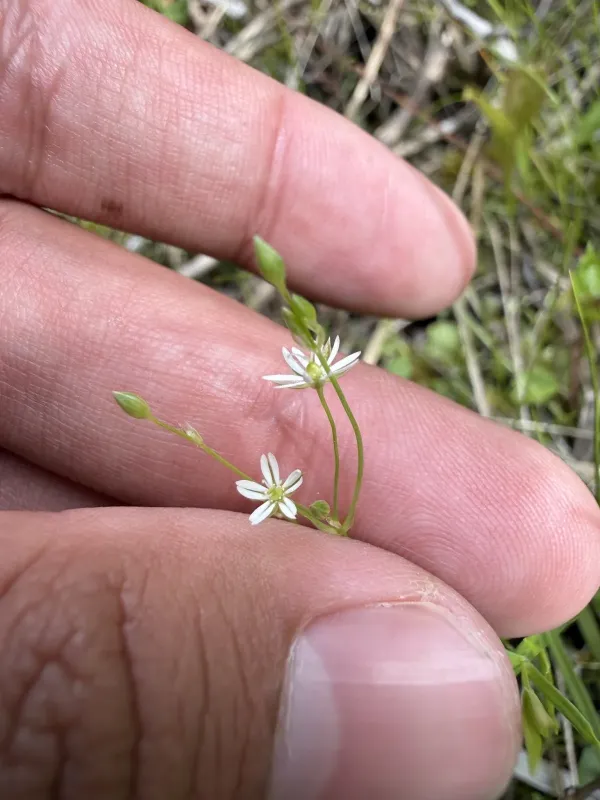
Description
Growing requirements
Stellaria longifolia, commonly known as long-leaf starwort, is a perennial herbaceous plant belonging to the Caryophyllaceae family. It is widely distributed across the northern hemisphere, including temperate and boreal regions of Europe, Asia, and North America.
This species thrives in moist environments. Its typical natural habitats include damp meadows, forested areas, riverbanks, and marshy thickets where soil moisture remains consistently high throughout the growing season.
In terms of pedological requirements, the plant prefers fertile, well-drained but moist soils with a neutral or slightly acidic pH level. It is adapted to survive in areas with cool summers and high humidity, which are essential for its vigorous growth.
Botanically, it features slender, square-shaped stems that are often weak or reclining. The leaves are characteristically long and lance-shaped, appearing in pairs along the stems. The flowers have white, deeply cleft petals, forming loose terminal inflorescences.
Economically, Stellaria longifolia is primarily recognized as a component of natural pastures and meadow ecosystems. It contributes to the overall stability of local vegetation cover and supports biodiversity in wild or semi-wild grasslands.
Main diseases and pests
The main threats to this plant are fungal diseases, especially those occurring in waterlogged soil conditions. Pathogens such as downy mildew or various rust fungi can infect the foliage, particularly when air circulation is poor.
Pests affecting the plant include various sucking insects, such as aphids, and chewing larvae that may consume leaf tissue. While the plant is generally hardy, significant infestation levels can stunt development and reduce the overall biomass production in its habitat.