
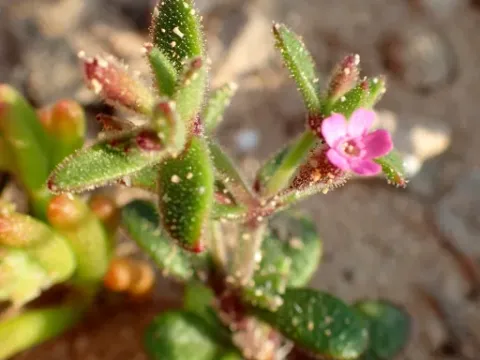
Sedum-leaved catchfly
Silene sedoides
Silene sedoides, commonly known as the sedum-leaved catchfly, is a member of the Caryophyllaceae family. This annual species is characterized by its succulent-like leaves and low-growing, compact growth habit.
What the section contains
Sedum-leaved catchfly
The plant is native to the Mediterranean basin. Its natural habitat includes rocky terrain and dry cliffs, where it has adapted to survive with minimal soil and high exposure to solar radiation.
Cultivation requires well-drained, sandy soils. Due to its Mediterranean origins, it thrives in environments where soil moisture drains away quickly, preventing any potential root rot caused by waterlogging.
Regarding climate, the species is highly adapted to arid and semi-arid conditions. It performs best in full sun and can withstand extended periods of drought without significant damage to its vegetative parts.
Agrotechnical management should focus on maintaining high light levels. Regular maintenance includes minimal fertilization, as this species is adapted to nutrient-poor soils and may suffer from over-fertilization.
Sowing should take place in late spring, once the threat of frost has passed. Seeds are small and benefit from being sown on the soil surface to ensure adequate light exposure during germination.
Standard practices include lightly pressing the seeds into the soil surface. Keep the substrate moderately moist, but not saturated, until the seedlings have fully established their root systems.