
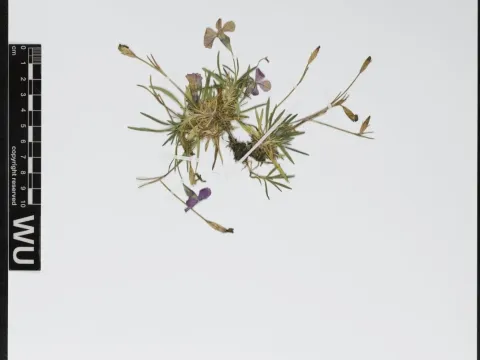
Scardus pink
Dianthus scardicus
Dianthus scardicus, commonly known as Scardus pink, belongs to the Caryophyllaceae family. This perennial herbaceous plant is native to the high-altitude rocky regions of the Balkan Peninsula, typically found on limestone outcrops and mountain slopes.
What the section contains
Scardus pink
The plant exhibits a mat-forming growth habit, producing dense cushions of narrow, glaucous-green leaves. During its blooming season, it produces short, erect stems topped with delicate, fringed flowers, which are highly characteristic of the Dianthus genus.
In terms of cultivation, this species thrives in lean, fast-draining soils. It is particularly well-suited for rock gardens and crevice plantings, where the soil mimics its native habitat. It prefers neutral to alkaline soil pH and cannot tolerate waterlogged conditions.
Scardus pink is highly sun-dependent and requires a fully exposed location to maintain its compact form and ensure prolific flowering. It is well-adapted to extreme temperature fluctuations, showcasing the hardiness typical of alpine flora.
Its primary agricultural and horticultural value lies in its ornamental use for rockeries, troughs, and wall gardens. The plant is prized for its year-round foliage aesthetic and its ability to withstand low-maintenance gardening environments.
The main threats to Dianthus scardicus are fungal diseases associated with excessive moisture, such as root rot and leaf spots. Proper site selection and coarse-textured soil substrates are essential to mitigate these risks effectively.
Pests such as aphids and spider mites may occasionally infest the plant, particularly in hot, dry weather. Regular monitoring and the application of appropriate systemic insecticides can help manage these populations without damaging the plant's sensitive tissue.
Soil-dwelling larvae can pose a risk to the root system, necessitating careful soil preparation prior to planting. Using grit or gravel mulch around the crown of the plant helps prevent contact with damp soil, reducing the likelihood of fungal pathogens.
Rust can occur in areas with poor airflow or high humidity, making the pruning of dead plant matter a necessary maintenance practice. Ensuring that the foliage remains dry by watering at the base of the plant is a critical cultural practice.
Overall, when grown in its preferred habitat, Scardus pink remains relatively healthy and requires minimal chemical intervention, aligning with the principles of sustainable horticultural management.