
Scleranthus
Scleranthus
Scleranthus, commonly known as knawel, is a genus of herbaceous plants belonging to the Caryophyllaceae family. These plants are known for their resilience and ability to thrive in nutrient-poor environments where other species struggle.
What the section contains

Scleranthus
The life cycle of Scleranthus includes both annual and perennial species, depending on the specific climate and regional conditions. These plants are often found in open areas, meadows, and rocky terrains across the Northern Hemisphere.
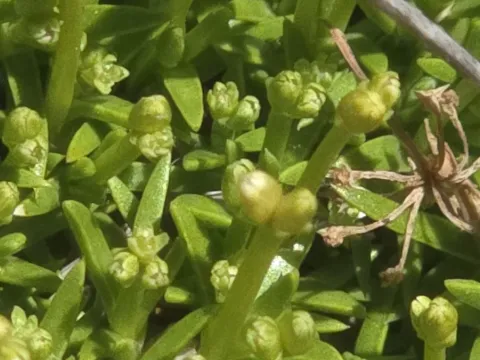
Botanically, they are characterized by their small, green, clustered flowers and narrow, often needle-like leaves. Their growth habit involves branching stems that create dense, mat-like structures, which are highly effective at covering exposed soil.
Native to Europe, Asia, and parts of North America, Scleranthus species have adapted to a wide range of temperate habitats. They play a significant role in stabilizing loose, sandy soils and preventing erosion in underdeveloped areas.
Their reproduction is largely dependent on the production of small, wind-dispersed seeds, which allow them to rapidly colonize fallow fields and under-managed grasslands.
Scleranthus species are highly tolerant of acidic and sandy soil conditions with minimal nutrient levels. They thrive in environments that are typically avoided by more demanding crop plants, making them indicator species for low-fertility soils.
The climate requirements for Scleranthus are flexible, as they are capable of enduring extreme heat and cold. They are well-adapted to regions with high solar radiation and periodic water scarcity, maintaining their growth through physiological efficiency.
In agricultural practice, managing Scleranthus involves improving soil structure and fertility. Liming acidic fields and increasing the input of balanced fertilizers will naturally reduce the competitiveness of Scleranthus and promote the growth of desired crops.
Proper soil management, such as consistent tillage and the incorporation of organic matter, is key to preventing the spread of knawel. These actions disrupt the shallow root systems and create a more favorable environment for cultivated species.
Rotational grazing and pasture maintenance are also recommended to ensure that the soil remains healthy. By avoiding overgrazing, landowners can prevent the bare soil patches that Scleranthus uses as a primary entry point for colonization.
Scleranthus is generally resistant to most common plant diseases, which contributes to its status as a robust and persistent weed in certain agricultural settings. It lacks significant vulnerability to the pathogens that affect traditional food crops.
The primary threat posed by Scleranthus to agriculture is its potential to degrade pasture quality. By forming dense mats, it competes for space and limited nutrients, which can suppress the growth of valuable forage grasses and clover species.
While Scleranthus does not face many threats itself, farmers can control it by using selective herbicides during the site preparation phase. Mechanical destruction via plowing is also highly effective in clearing fields before sowing primary crops.
Pests such as certain soil-borne nematodes or insects may occasionally feed on Scleranthus, but they rarely threaten the survival of the plant. Its hardy nature allows it to recover quickly from minor biological stresses.
The most effective strategy against this plant is maintaining high agronomic standards, including proper crop rotation and consistent soil monitoring. These practices keep the soil environment balanced, discouraging the establishment of such hardy, opportunistic weeds.