
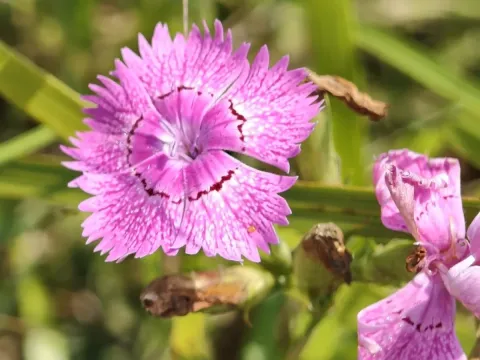
Seguier's Pink
Dianthus seguieri
Sowing seeds of Seguier's Pink in nursery conditions is primarily conducted in early spring, between March and April, using a greenhouse or indoor setup. Containers are filled with a light, well-draining substrate with a neutral pH level.
What the section contains
Seguier's Pink
The optimal germination temperature ranges from 18 to 20 degrees Celsius. Seeds should be scattered on the surface and lightly dusted with a thin layer of vermiculite or sand, ensuring enough light penetration, which is vital for successful germination.
Direct sowing in the field is performed in May once the soil has warmed up to stable temperatures. Consistent moisture is crucial for seedlings, as they are particularly vulnerable to drying out during the early growth stages.
Pricking out the seedlings occurs when the plants develop two to three true leaves, moving them into individual pots to foster a strong root system, which significantly improves survival rates during transplantation.
Hardened plants are relocated to their permanent outdoor location in late May or early June, spacing them 20 to 30 centimeters apart to ensure proper airflow and minimize the risk of pathogen accumulation.
Seguier's Pink is a perennial herbaceous plant belonging to the Caryophyllaceae family, naturally found in dry meadows and rocky alpine slopes throughout Europe.
The species thrives in sunny, well-lit environments. Insufficient light leads to etiolation, where stems become weak and elongated, and flowering density is significantly reduced.
Regarding soil, the plant prefers light, well-drained, sandy-loam or loamy textures, ideally with some lime content. Soil structure is more critical than fertility for the long-term health of this species.
Water stagnation is detrimental to the root system. If the local soil is heavy clay, providing a drainage layer made of crushed stone or coarse sand at the planting site is highly recommended to prevent rot.
The plant demonstrates excellent winter hardiness. However, in regions prone to severe winds and lack of snow cover, a light protective layer of mulch or horticultural fleece helps prevent frost heave and damage to the root collar.
Fungal diseases, specifically Fusarium wilt, pose a significant threat to Seguier's Pink, as it compromises the vascular system of the plant and inevitably leads to wilting and death.
Root rot is frequently caused by improper watering techniques and poor soil aeration. Maintaining a balanced irrigation schedule and avoiding overcrowding is the best preventative strategy against these pathogens.
Common pests include aphids and spider mites, which feed on the sap of tender shoots and buds, resulting in deformed flowers and a general decline in the plant's vigor.
In humid microclimates, slugs and snails may graze on the succulent leaves and stems, particularly during the nighttime hours, which can mar the aesthetic appeal of the plantation.
Integrated pest management, including the use of systemic fungicides and insecticides, should be applied promptly. Maintaining a weed-free environment and removing debris helps reduce pest habitats.