
Sagina normaniana
Sagina normaniana
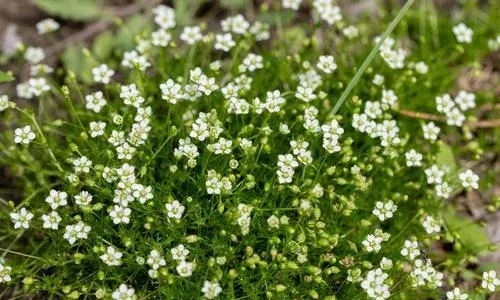
Description
Sowing dates
Seed sowing is typically performed in early spring. The seeds are minute and should be surface-sown on a moist, fine-textured growing medium, then gently pressed to ensure good soil contact without covering them.
Maintaining a consistent ambient temperature of 18–20 degrees Celsius is optimal for germination. Regular misting is necessary to keep the seeds hydrated until they develop a strong root system.
Seedlings should be transplanted into larger containers or permanent locations once they reach the two-leaf stage. Spacing should be adjusted depending on the desired density of the groundcover.
Vegetative propagation via clump division is a common and highly effective practice. Splitting mature mats in the spring allows for rapid establishment and creates uniform cover in desired areas.
Initial preparation of the planting site is crucial, focusing on weed suppression and soil aeration. Incorporating coarse sand into the substrate helps prevent compaction and supports the fine root growth of the plant.
Growing requirements
Sagina normaniana is a perennial herbaceous plant belonging to the Caryophyllaceae family. Known for its mat-forming growth habit, it is widely appreciated in landscaping for its ability to create dense, vibrant green carpets.
The plant thrives in well-drained, sandy or loamy soils. It is essential to ensure proper soil drainage, as the species is highly susceptible to root rot if waterlogged conditions persist for long periods.
It prefers full sun or partial shade locations. In brighter conditions, the plant produces more compact rosettes, which enhances its resistance to foot traffic and improves overall aesthetic appeal.
Botanically, it features fine, awl-shaped leaves and a creeping root system. Its ability to spread makes it an excellent choice for ground coverage in rock gardens, between paving stones, or as a decorative element in border plantings.
The species is highly adaptable to cool and temperate climates, demonstrating good winter hardiness. During dormancy, it maintains its green foliage, provided the soil moisture levels are managed correctly.
Main diseases and pests
The primary threats to this culture are fungal diseases, particularly when air circulation is poor or humidity levels are excessive. Preventive measures include ensuring proper site drainage and avoiding dense, damp zones.
Slugs and snails can cause cosmetic damage to the delicate foliage, especially in moist garden environments. Monitoring and non-chemical deterrents are often sufficient to manage these populations.
Weeds pose a significant challenge during the plant's establishment phase. Keeping the area free of weeds ensures that the Sagina normaniana mats can spread and dominate the intended space effectively.
Drought stress may occur during peak summer months, leading to browning patches. Providing moderate, consistent irrigation during extended dry spells is essential to maintain the plant's health and vibrant color.
Excessive fertilizer application can weaken the plant's structure, causing it to lose its compact, mat-like form. A balanced, low-concentration fertilizer used sparingly is recommended to support steady and healthy development.