
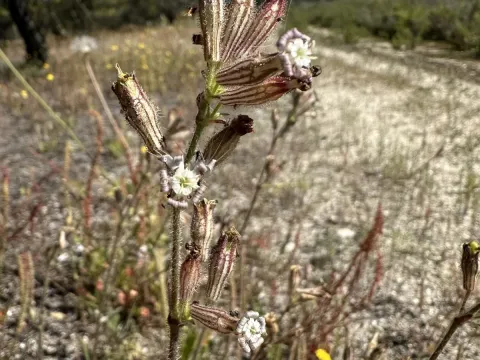
Silene nicaeensis
Silene nicaeensis
Silene nicaeensis is a herbaceous plant belonging to the Caryophyllaceae family. Originally native to Mediterranean coastal regions, it has evolved to thrive in sandy soils and exposed environments where it withstands saline winds and periods of significant drought.
What the section contains
Silene nicaeensis
The plant requires well-drained, porous soil to prevent root issues. It is particularly well-suited to substrates that are low in nutrients, where its specific physiological adaptations allow it to maintain growth and stability without excessive competition.
Exposure to full sunlight is essential for this species. In shaded conditions, the plant may become leggy, lose its vigor, and show a reduced ability to produce healthy flowers or seeds, which is detrimental to its overall development and lifecycle.
Regarding climate, Silene nicaeensis prefers moderate temperatures. It is sensitive to prolonged waterlogging, meaning that irrigation management must be precise to maintain soil moisture without creating an anaerobic environment around the root system.
In a cultivation setting, providing adequate space between individuals is critical. Proper spacing ensures optimal airflow, which is a key factor in reducing the risk of humidity-related disorders that this species is prone to in overly dense plantings.
Sowing should take place in early spring when the soil temperature consistently supports seed germination. The seeds are small and should be placed at a shallow depth to ensure they have enough light and energy to reach the surface successfully.
Direct seeding in prepared beds is common, provided that the soil has been leveled and cleared of weeds. Weed control is essential during the establishment phase, as the young seedlings are not highly competitive against faster-growing weeds.
If utilizing a nursery approach, sowing in trays allows for a controlled environment, protecting the seedlings from early-season weather fluctuations and ensuring a more uniform crop population before transplanting to the field.
The planting density must be balanced based on the specific end use of the plants. Excessive density is discouraged to avoid self-shading and to facilitate easier management of the crop as it approaches maturity.
Once sown, the soil surface should be gently firmed to guarantee adequate contact between the seeds and the substrate. Maintaining a stable moisture level in the top layer of soil during the first week is vital for uniform germination.
The primary threats to Silene nicaeensis are fungal infections triggered by excessive soil moisture or poor drainage. Root rots are a significant risk if the soil remains waterlogged for extended periods, leading to rapid plant decline.
Powdery mildew represents another common concern, especially in environments with high humidity and stagnant air. Management involves prompt removal of infected plant tissues and ensuring that the canopy has sufficient airflow to stay dry.
Pests, particularly aphids and mites, can occasionally affect the foliage by extracting nutrients, which weakens the plant and makes it more susceptible to other stressors. Early detection through regular field scouting is highly recommended.
If infestations reach economic thresholds, application of appropriate insecticides or horticultural soaps may be necessary. It is crucial to follow label guidelines to avoid causing phytotoxic effects on the plant itself.
A holistic approach to pest and disease management, including strict hygiene practices such as removing debris and infected plants, is the most effective strategy for ensuring the long-term health and productivity of the crop.