
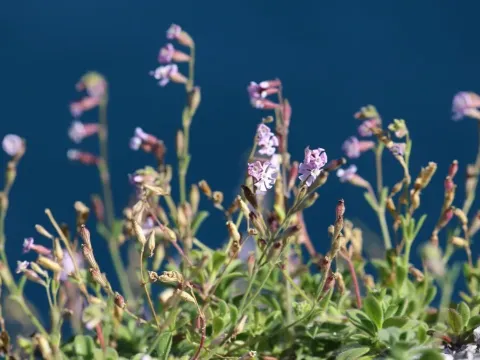
Silene obtusifolia
Silene obtusifolia
Silene obtusifolia is a herbaceous plant belonging to the Caryophyllaceae family. As an agricultural crop, it is noted for its adaptability to specific climatic conditions, often being studied for its resilience and potential use in restoration ecology or as a specialized fodder component.
What the section contains
Silene obtusifolia
The optimal sowing period occurs in early spring once soil temperatures have stabilized sufficiently. Seeds should be sown shallowly, as they require adequate light to break dormancy and initiate germination effectively.
Proper field preparation involves ensuring a fine tilth to facilitate deep root penetration. A consistent sowing depth is crucial for ensuring a uniform plant stand and optimizing the subsequent growth cycle across the field.
In terms of vegetation development, the plant progresses through its life cycle relatively quickly. Careful monitoring during the early stages of establishment ensures that seedlings are not overwhelmed by competing vegetation.
Fertilization at the time of sowing can significantly boost initial growth rates. Utilizing phosphorus-based starters supports root development, which is essential for the plant's future ability to tolerate moisture deficits.
The crop thrives in well-drained soils, ideally sandy or loamy types with excellent aeration. It is well-documented for its tolerance to alkaline and saline soil environments, which allows it to be cultivated in areas where other crops fail.
Environmental conditions must include a high level of solar radiation. The plant does not perform well in shaded or confined environments, as these conditions significantly limit biomass production and lead to spindly growth.
Regarding climate, Silene obtusifolia is accustomed to Mediterranean-like conditions characterized by mild, wet winters and dry summers. It exhibits strong drought resistance once the plant has reached a certain stage of maturity.
Soil pH should ideally be maintained in the neutral to slightly alkaline range. Soil testing prior to planting is recommended to ensure that micronutrient availability matches the specific needs of the Caryophyllaceae family.
Effective water management is key during the first few weeks after emergence. Once the root system is established, the plant becomes remarkably self-sufficient, requiring minimal intervention in normal rainfall years.
Pest management should focus on common garden insects that target the foliage of herbaceous plants. Aphids and caterpillars are the primary pests that may require attention if population thresholds are exceeded during the growing season.
Fungal pathogens such as powdery mildew can be an issue if air circulation within the canopy is poor. Promoting adequate plant spacing is the best cultural practice to prevent the spread of such fungal infections.
Weed control is critical, especially during the first phase of growth when the plant is most vulnerable to competition. Mechanical cultivation between rows is often the most cost-effective and environmentally friendly method.
Crop rotation protocols should be strictly followed to prevent the accumulation of soil-borne diseases. Avoiding monocropping is essential for maintaining soil health and preventing the long-term buildup of specific pathogen populations.
- Powdery mildew (Erysiphaceae)
- Aphids and leaf-eating beetles
- Root rot caused by poor soil drainage
- Cutworms affecting young seedlings