
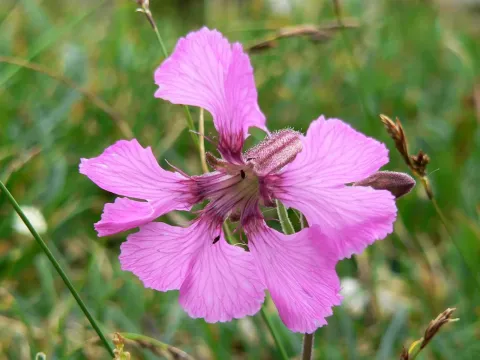
Silene elisabethae
Silene elisabethae
Silene elisabethae, commonly known as Elizabeth's catchfly, is a perennial herbaceous plant belonging to the Caryophyllaceae family. It is native to the Italian Alps, typically found growing in crevices and rocky outcrops in the subalpine zone.
What the section contains
Silene elisabethae
Botanically, the plant is characterized by a basal rosette of narrow leaves and striking, large, vibrant pink flowers with deeply bifid petals. It rarely exceeds 20 centimeters in height, making it an ideal candidate for rock gardens.
The cultivation of this species requires well-draining, grit-rich soil. It thrives in alkaline or neutral conditions and is extremely intolerant of waterlogged soil, which often leads to rapid decline of the root system.
This culture requires high light intensity and performs best in full sun. In a garden setting, it is essential to provide good air circulation and avoid planting in sites where snowmelt or rain tends to pool around the crown.
It is widely regarded as a collector's item for alpine enthusiasts due to its specific ecological needs and high aesthetic value during its late spring to early summer blooming period.
The primary threat to the health of Silene elisabethae is root rot, triggered by poor drainage and excessive moisture during the dormant winter period.
Gastropods such as slugs and snails are significant pests, as they are attracted to the succulent-like foliage and can cause severe defoliation of young plants.
Aphid infestations can occur during periods of prolonged drought, requiring manual removal or the application of specialized pest control agents.
To mitigate these risks, gardeners should ensure the surface around the plant is covered with a layer of gravel or stone chips to keep the collar of the plant dry.
Maintaining a balanced environment with proper soil aeration is the best proactive strategy against both fungal pathogens and opportunistic insect pests.