
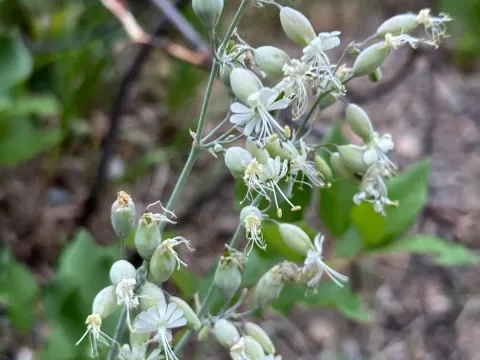
Silene csereii
Silene csereii
Silene csereii, commonly known as a type of catchfly, belongs to the Caryophyllaceae family. It is typically a biennial or short-lived perennial herb that has adapted to harsh environmental conditions, including poor nutrient availability.
What the section contains
Silene csereii
The native range of this species extends across Southeastern Europe and parts of Western Asia. It has successfully naturalized in various regions globally, demonstrating strong invasive potential in disturbed habitats and roadside environments.
Botanically, the plant is characterized by smooth, glaucous stems that can reach nearly a meter in height. Its leaves are opposite and lanceolate, while its small, five-petaled flowers appear in clusters, providing significant visual and biological diversity.
In terms of soil requirements, this plant favors well-drained, sandy, or rocky substrates. It thrives in soils with low organic matter content, making it an excellent candidate for stabilizing eroded slopes or reclaiming abandoned agricultural lands.
The agronomic management of Silene csereii is relatively straightforward due to its drought tolerance. It requires full sunlight to reach its maximum productivity, as shading significantly reduces both vegetative growth and seed production.
The primary threats to the health of this culture involve fungal infections related to stagnant water. Excessive soil moisture often leads to root and crown rot, which can quickly diminish the density of a stand.
Pest management focuses primarily on preventing infestations of aphids and noctuid moth larvae. In large-scale cultivation, maintaining healthy soil drainage and avoiding over-fertilization are the best preventative measures against common biological stressors.