
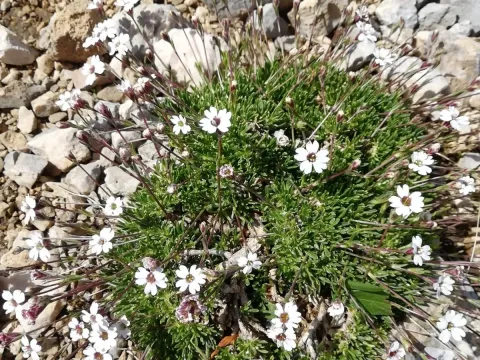
Silene dianthoides
Silene dianthoides
Silene dianthoides is a perennial herbaceous plant belonging to the Caryophyllaceae family. It is recognized for its delicate foliage and floral beauty, making it a popular choice for rock gardens and naturalistic landscapes.
What the section contains
Silene dianthoides
Originating from mountainous regions, this plant is naturally adapted to cool environments and well-drained soils. Its native distribution spans areas with varying rocky substrates where it thrives in sunlight.
The plant demands full sun exposure to maintain its compact, dense habit. Insufficient light results in elongated stems and diminished flower production, which detracts from its overall ornamental value.
Soil requirements for Silene dianthoides focus on drainage. The species cannot tolerate waterlogged conditions, which lead to root rot. Sandy or gravelly soil profiles that mimic its native mountain habitat are ideal.
Climatically, it is a hardy species capable of surviving freezing temperatures. It is well-suited for temperate regions where it can withstand winter dormancy without additional protection, provided the soil remains well-drained.
Fungal diseases such as powdery mildew are the most common issues, particularly when the plant is exposed to high humidity or lack of ventilation between individual specimens.
Root rot is a physiological condition often induced by poor soil structure or overwatering. Maintaining dry conditions around the root collar is essential for the longevity of the plant in any garden setting.
Insect pests, including aphids and spider mites, are frequent visitors that can weaken the plant by feeding on cell sap. Symptoms include yellowing leaves and stunted growth patterns.
- Monitor leaf undersides for signs of mite webbing.
- Use systemic insecticides for severe aphid infestations.
- Implement proper spacing to ensure adequate air circulation.
Preventative cultural practices, such as removing debris from around the plant base and avoiding overhead irrigation, are the most effective strategies for maintaining a healthy and thriving population of Silene dianthoides.