
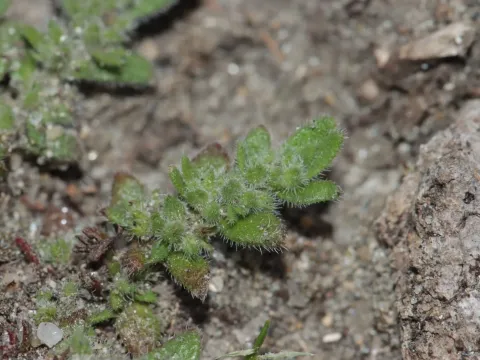
Hairy rupturewort
Herniaria hirsuta
The cultivation of Hairy rupturewort is often performed in a controlled environment to ensure the purity and quality of the raw herbal material.
What the section contains
Hairy rupturewort
Seeds should be sown into well-drained, sandy soils during the autumn or early spring to allow for natural stratification if necessary.
As the plant is small, shallow sowing (no more than 0.5 cm deep) is crucial to ensure that seeds emerge effectively without struggling through heavy soil.
Proper spacing is required to allow the prostrate stems to spread adequately, maximizing the growth potential of individual plants in the field.
Ensuring constant but light soil moisture during the first few weeks after planting is essential for achieving successful germination rates.
Herniaria hirsuta belongs to the Caryophyllaceae family and is recognized by its distinct hairy, prostrate stems and small, clustered flowers.
The plant thrives in nutrient-poor, rocky, and sandy soils, making it highly adaptable to sites where other crops struggle to survive.
It is an extremely drought-tolerant species that requires full sun exposure to maintain its vigor and optimal chemical composition.
Soil pH should ideally be neutral or slightly alkaline, as acidic conditions can hinder root development and overall plant health.
Adequate air circulation is necessary to prevent the accumulation of moisture within the foliage, which can lead to fungal issues.
Yielding is measured by the biomass of dried flowering tops, which are the main part of the plant utilized for medicinal purposes.
While the yield per hectare is not as high as traditional agricultural crops, the value of the botanical product is significant in herbal markets.
Maximizing the yield requires careful timing of the harvest to coincide with the period of peak flavonoid and saponin accumulation.
Effective plantation management, including the removal of competing weeds, is the primary factor in improving overall harvest quality.
High-quality raw material must be uniform, free from discolored leaves, and processed quickly to prevent biochemical degradation.
The most significant threats to Herniaria hirsuta include fungal pathogens like mildew and root rot caused by stagnant water or high humidity.
The plant is highly sensitive to broad-spectrum herbicides, which often leads to total crop loss if applied in nearby farming operations.
Pests such as mites and aphids can affect the plant during extreme summer droughts when its natural defensive mechanisms are compromised.
Invasive weeds pose a constant risk by outcompeting the Hairy rupturewort for light and space during the early vegetative stages.
Poor soil structure and lack of proper aeration contribute to root decay, rendering the plants unsuitable for medicinal harvesting.
Harvesting is performed during the peak flowering stage to ensure the highest therapeutic potency of the collected plant biomass.
The stems are typically cut manually or with specialized tools, keeping the product clean and free from soil contamination.
Drying is an essential post-harvest step; it should be done in a shaded, well-ventilated space to avoid degradation from direct sunlight.
The product must be thoroughly dried until the stems are brittle, which helps prevent spoilage and maintains long-term storage stability.
Proper storage involves using airtight containers in cool, dark environments to preserve the delicate essential oils and chemical compounds.