
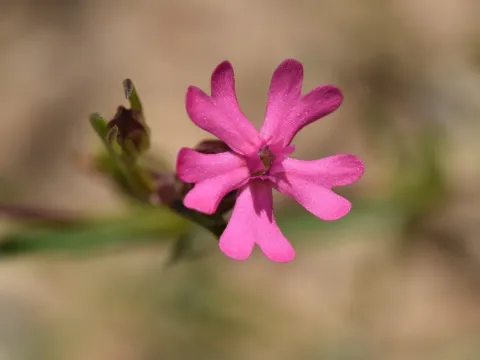
Catchfly
Silene muscipula
Catchfly (Silene muscipula) is an annual herbaceous plant belonging to the Caryophyllaceae family. In temperate climates, sowing in open ground is carried out in spring when the soil temperature reaches 10-12 degrees Celsius, typically occurring from late April to early May.
What the section contains
Catchfly
It is also possible to grow the plant through seedlings to ensure earlier flowering. In this case, sowing in containers is performed in March, followed by transplanting into individual pots after the emergence of two true leaves.
The seeds of this plant show good germination rates, though they require surface sowing or minimal depth coverage, as germination is light-dependent or benefited by thin layers of substrate. The optimal spacing is 20 by 30 centimeters to provide adequate nutrition and space for growth.
Soil preparation is a crucial aspect: the planting area must be thoroughly cleared of perennial weeds, as the crop lacks strong competitive capabilities during its initial growth phases.
Post-sowing irrigation should be moderate to prevent seed displacement or the formation of soil crusts that hinder uniform emergence.
The plant prefers well-lit areas with direct sunlight. In shaded conditions, stems tend to become leggy, and flowering intensity significantly decreases, which negatively impacts the aesthetic quality of the crop.
The crop has moderate soil requirements. Optimal conditions include light, well-drained sandy or loamy soils with a neutral or slightly alkaline pH reaction.
Catchfly does not tolerate waterlogging in the root zone. In heavy clay soils, incorporating sand or gravel is necessary to improve aeration and prevent root rot during wet periods.
The plant possesses relative drought tolerance; however, during active vegetation and budding phases, it requires regular watering to maintain turgor and facilitate the development of large inflorescences.
A notable feature of the plant is the sticky secretion on its stems, which protects the inflorescences from crawling insect pests, making the plant resistant to several external biological threats.
The primary pests for this species are aphids, which may attack the terminal shoots, and spider mites during prolonged droughts or periods of low air humidity.
Among fungal diseases, various leaf spots and root rots are the most dangerous, typically occurring when the substrate is over-watered or when planting density limits ventilation.
To prevent the spread of pests, timely weeding and the use of contact or systemic insecticides are recommended in cases of severe infestation.
Preventive measures against fungal diseases include proper crop rotation and avoiding excessive nitrogen fertilization, which can stimulate vegetative growth while lowering the plant's natural immunity.
If powdery mildew symptoms are detected on the leaves, fungicides based on copper or sulfur should be applied, strictly adhering to the dosages indicated in the product application guidelines.
Harvesting for agricultural or decorative purposes begins during the peak flowering period. At this stage, the stems are cut with sharp tools for use in bouquets or for collecting seed material.
When harvesting for seeds, collection is performed after full maturation, characterized by the seed pods turning a distinct brown hue and the seeds inside becoming hard and dark.
Collecting seed pods is best done during dry weather to prevent the seeds from being affected by mold fungi during the post-harvest ripening and indoor storage process.
After cutting, the seed material should be dried in a well-ventilated, shaded location, followed by threshing and cleaning from plant debris through winnowing.
It is recommended to store the seeds in paper bags or cloth pouches under stable, low-humidity conditions, which ensures viability for up to 2-3 years.