
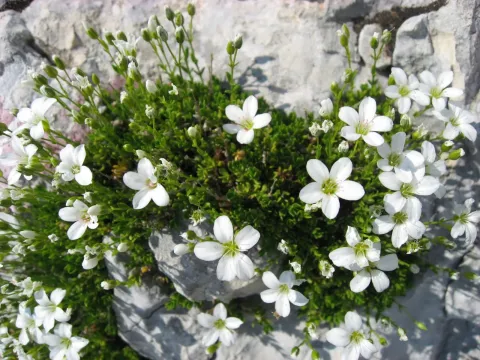
Arenaria gracilis
Arenaria gracilis
Arenaria gracilis belongs to the Caryophyllaceae family and is commonly propagated via seeds. Sowing is best performed in late autumn for winter chilling or in early spring once the soil temperature consistently reaches 10 degrees Celsius.
What the section contains
Arenaria gracilis
When starting seeds in containers, use a light, well-draining soil mix. Sow seeds on the surface, as they require light to germinate, and barely cover them with fine vermiculite or sand to maintain humidity without blocking the sun.
Stratification is highly recommended for higher germination rates. Place the seeds in a moist substrate in a refrigerator for two to three weeks before moving them to a warmer, brighter area to trigger growth.
Seedlings are delicate and should be handled with care during the transplanting phase. Once they have developed two sets of true leaves, they can be pricked out into individual small pots to grow until they are strong enough for the garden.
When planting outdoors, space the plants about 15 to 20 centimeters apart. This spacing allows the plants to spread and eventually form a thick, decorative mat while ensuring each plant receives adequate airflow.
This species thrives in well-drained, sandy, or rocky soils. It is highly intolerant of waterlogged conditions, which can quickly lead to root rot. Therefore, adding gravel or coarse sand to the planting hole is essential for drainage.
Full sun is a strict requirement for Arenaria gracilis to maintain its characteristic low-growing, compact habit. In shaded areas, the stems will stretch, become leggy, and flowering will be significantly reduced.
The plant is remarkably drought-tolerant once established. Supplemental irrigation is only necessary during extended periods of extreme heat or during the first few weeks after planting to ensure roots are adequately settled.
Fertilization should be kept to a minimum as this plant is adapted to nutrient-poor, alpine conditions. A light application of balanced mineral fertilizer in early spring is sufficient to support seasonal growth and floral production.
Maintenance is relatively low, focusing mainly on weed control. Because the plant grows close to the ground, hand-weeding is necessary to avoid damaging the fine roots and to keep the mat clear of competition.
The most common threat to this species is fungal infection of the roots caused by excessive soil moisture. Proper site selection and avoiding heavy clay soils are the best preventive measures to ensure the health of the plant.
Slugs and snails can be problematic, especially during wet weather, as they feed on the succulent foliage. Barriers such as crushed eggshells or coarse grit placed around the base of the plant can deter these pests effectively.
Powdery mildew can occasionally appear if the plants are crowded or if air circulation is poor. Ensuring that the foliage stays dry and the planting site is airy will significantly reduce the risk of this infection.
Aphids might occasionally infest young growth during the spring. If an infestation is spotted, manual removal or the application of insecticidal soap is usually sufficient to resolve the issue without harming the plant.
Overall, Arenaria gracilis is a robust plant when grown in conditions that mimic its natural alpine environment. Regular observation is the best way to catch early signs of distress, whether from pests or improper environmental factors.