
Arenaria conimbricensis
Arenaria conimbricensis
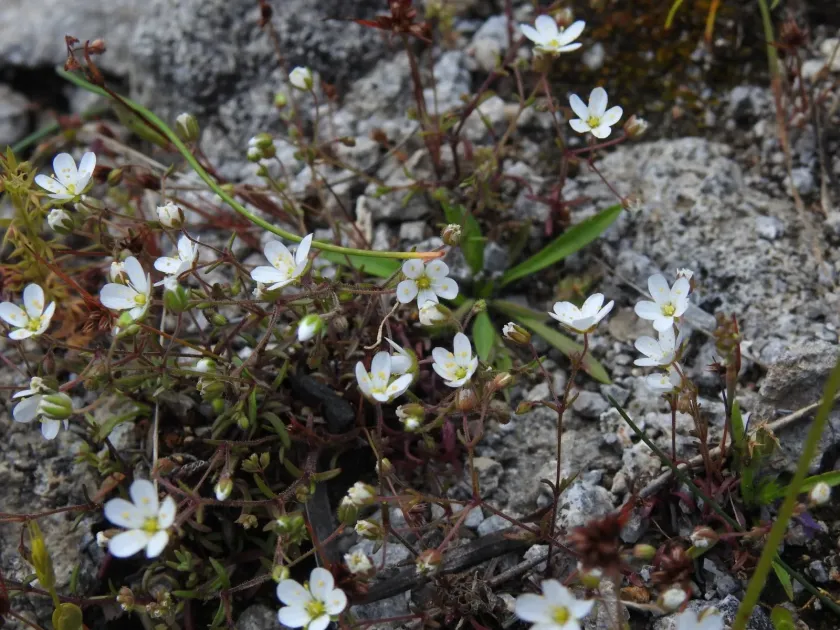
Description
Growing requirements
Arenaria conimbricensis is a herbaceous plant belonging to the Caryophyllaceae family. It is a rare botanical species that serves as a subject of interest in ecological and evolutionary studies due to its restricted distribution on the Iberian Peninsula.
This species is well-adapted to specific ecological niches, primarily growing in rocky or sandy substrates. Its physiology is characterized by a high tolerance for poor soils with limited nutrient content, which is a common trait among plants in the Arenaria genus.
Climate requirements for the plant include a preference for Mediterranean conditions characterized by mild winters and hot, dry summers. It thrives in open environments where solar radiation is high, providing the necessary energy for its reproductive and developmental cycles.
Soil management for this species requires avoiding excessive moisture and ensuring excellent drainage. In any controlled environment, the substrate must mimic natural conditions, maintaining a neutral to slightly alkaline reaction to prevent root distress.
The plant has minimal pest pressure in its natural environment, though it is sensitive to soil-borne fungal pathogens if the moisture levels are not strictly managed. Currently, the species is primarily preserved for ecological monitoring and scientific biodiversity conservation.