
Arenaria erinacea
Arenaria erinacea
Description
Growing requirements
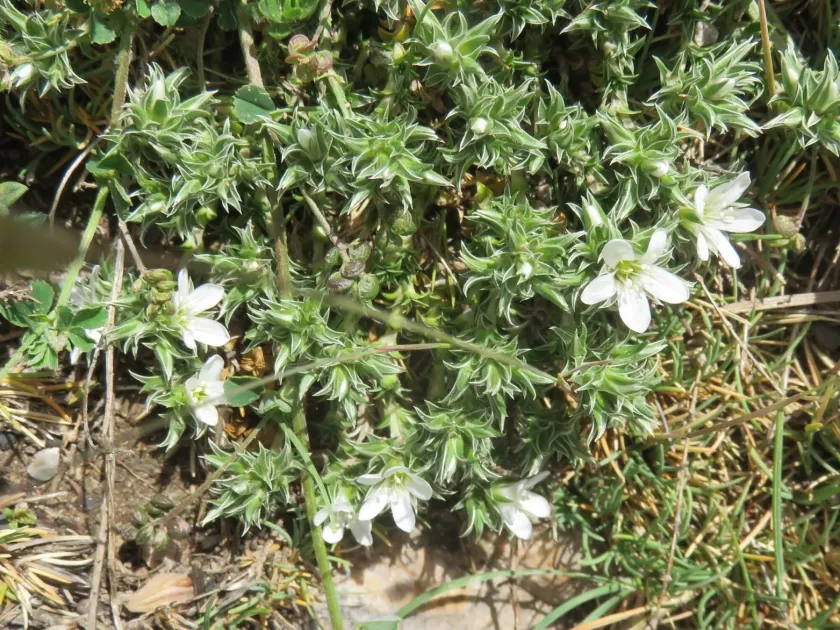
Arenaria erinacea is a perennial plant belonging to the Caryophyllaceae family. It is widely known for its tight, cushion-forming growth habit, creating dense, prickly mats that provide an attractive, sculptural element to any garden.
The species originates from the mountainous regions of Southwestern Europe. Its evolution in alpine environments has endowed it with excellent hardiness and the ability to thrive in extremely poor, rocky conditions where most plants would perish.
The primary requirement for successful cultivation is impeccable drainage. Arenaria erinacea demands gritty, mineral-rich, and non-fertile soil. The roots must not be exposed to standing water, as this is the most common cause of failure for this species.
Full sun is essential for the plant to maintain its characteristic compact, mound-like shape. If kept in partial shade, the cushions tend to stretch, lose their density, and become vulnerable to various environmental stresses.
Maintenance is minimal. Fertilizers are generally unnecessary and can even be detrimental, as they encourage lush, weak growth that ruins the plant's natural, dense form. Watering should be restricted to the bare minimum during long dry spells.
Main diseases and pests
Root rot is the most significant threat to Arenaria erinacea, typically triggered by high humidity or poor soil drainage. Ensuring that the crown of the plant stays dry with a gravel mulch is a standard protective practice.
Fungal issues such as powdery mildew may occur in stagnant, damp air conditions. To manage this, gardeners should ensure good air circulation around the plants and apply appropriate fungicidal treatments if necessary.
Slugs and snails are the most common pests that can damage the plant's foliage. Applying physical barriers like grit or crushed stone around the mounds is an effective way to discourage these pests from feeding on the leaves.
Improper soil composition often leads to center-dieback, where the middle of the cushion browns and dies. Removing these dead sections promptly is important to stop any fungal spread and allow the remaining healthy parts to expand.
Regular inspections are recommended, especially during transition seasons, to ensure that the cushion remains firm and free of debris. Keeping the plant clear of fallen leaves prevents the accumulation of moisture within the dense structure.