
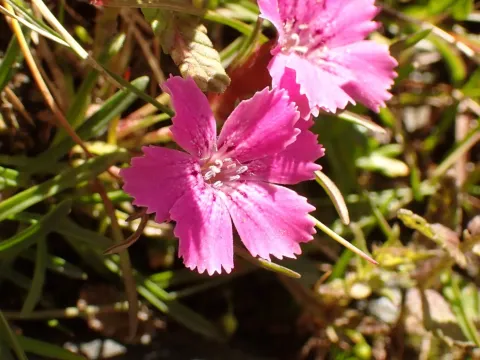
Glacier pink
Dianthus glacialis
Sowing seeds of the glacier pink is recommended in early spring or late autumn in open ground conditions. For seedling production, seeds are sown in containers with a light substrate in March, maintaining a temperature of approximately 18-20 degrees Celsius.
What the section contains
Glacier pink
The seeds of this culture have high germination rates but require mandatory stratification when sown in greenhouse conditions. After sowing, the substrate surface is lightly sprinkled with sand to prevent the development of fungal diseases in young seedlings.
Pricking out the seedlings is performed at the stage of forming two true leaves, transferring them into individual pots or trays. Transplanting to a permanent location in the rock garden is carried out at the end of May, once the risk of night frosts has passed.
The distance between plants during planting should be at least 15-20 centimeters to ensure adequate ventilation and nutrient access. Dense planting can lead to excessive moisture retention and damage to the root system.
When using vegetative propagation, cuttings are taken during the active growing season before flowering begins. The cuttings root quickly in sandy soil with regular but moderate watering.
The glacier pink, belonging to the Caryophyllaceae family, is a typical representative of alpine flora. In nature, it grows on rocky mountain slopes in Europe, preferring sunny locations.
The crop requires well-drained, nutrient-poor soils with a neutral or slightly alkaline pH. Water stagnation is fatal to this plant; therefore, on heavy clay soils, it is necessary to create a drainage layer of gravel or expanded clay.
The plant possesses exceptional winter hardiness and is capable of withstanding the harsh conditions of high-altitude environments. In cultivation, the glacier pink requires protection against soaking during autumn and winter thaws.
For normal development, the pink needs plenty of light, so placement in shaded areas is strongly discouraged. A lack of sunlight leads to elongated shoots and the absence of full-fledged flowering.
The crop has no specific requirements for fertilization. Excessive use of organic fertilizers, especially fresh manure, can trigger excessive green mass growth at the expense of flowering and reduce resistance to diseases.
The main threat to the glacier pink is fungal diseases caused by violations of agricultural practices. Among them, fusarium and various types of rots affecting the root collar are the most frequently encountered.
In conditions of high air humidity, rust can develop on the leaf blades, manifesting as brown spots. Prevention involves maintaining optimal planting density and improving drainage.
Among pests, aphids and spider mites pose the greatest danger to young shoots. At the first signs of infestation, systemic insecticides or biological control agents must be applied.
Mole crickets and wireworms can also damage the plant's root system, especially in areas where the soil remains damp for long periods. For protection, it is recommended to use baits or timely soil cultivation.
An important element of prevention is crop rotation if the pink is grown in specialized nurseries. It should not be planted in areas where other members of the Caryophyllaceae family were previously grown.