
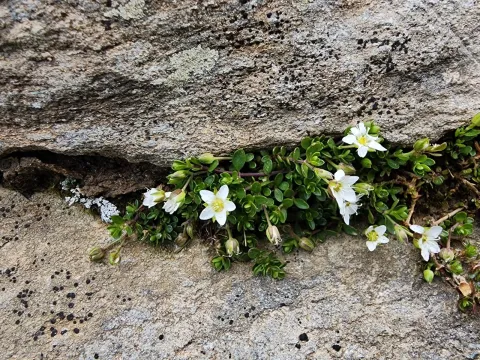
Arenaria biflora
Arenaria biflora
Arenaria biflora is a perennial herbaceous plant belonging to the Caryophyllaceae family. It is a highly specialized species adapted to harsh alpine environments.
What the section contains
Arenaria biflora
The plant originates from the high mountain ranges of Europe, specifically in the Alps and Pyrenees, where it thrives on rocky slopes, scree, and stony mountain ridges.
Cultivation requires conditions that mimic the natural high-altitude habitat. Essential requirements include perfectly drained, mineral-rich, and poor soils with a neutral pH level.
The plant is exceptionally hardy against freezing temperatures and high winds. However, it requires a cool growing season and struggles significantly under intense summer heat or high humidity.
Economically, Arenaria biflora is cultivated primarily for ornamental purposes. It is a prized specimen for rock gardens and crevice plantings, favored by horticulturists for its compact growth habit and durability.
The primary threat to the health of Arenaria biflora is root rot. This condition is almost exclusively caused by poor drainage or excessive soil moisture during the growing season.
Fungal diseases, such as mildew, can appear if the plant is grown in environments with poor air circulation or high humidity levels near the foliage.
Pests such as slugs and snails represent a constant challenge, as they feed on the succulent foliage and can quickly degrade the appearance of the plant.
Effective management includes maintaining a dry crown area, often achieved by mulching with grit or small pebbles to keep the leaves elevated above the soil moisture.
Cultural control, including careful watering practices and ensuring adequate light exposure, is the most effective way to prevent outbreaks of both disease and pest infestations.