
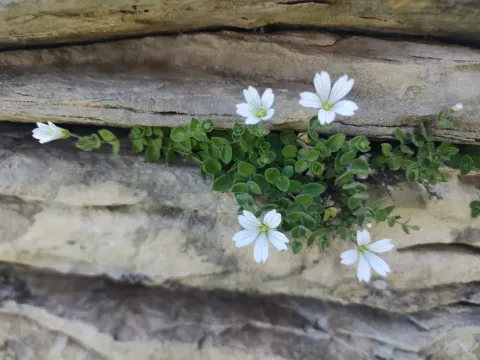
Arenaria bertolonii
Arenaria bertolonii
Arenaria bertolonii is a perennial herbaceous plant belonging to the Caryophyllaceae family. In agronomic and botanical contexts, it is recognized as a hardy, low-growing species that thrives in challenging, nutrient-poor environments such as rocky outcrops and sandy plains.
What the section contains
Arenaria bertolonii
The plant exhibits significant drought tolerance, having evolved to occupy niches with minimal moisture retention. Its morphological structure, characterized by fine linear leaves, allows it to form dense, mat-like cushions that provide effective soil stabilization and protection against erosion.
Soil requirements for Arenaria bertolonii are strict regarding aeration and drainage. It requires porous, well-draining substrates, ideally with a neutral to slightly alkaline pH. Compacted or heavy clay soils inhibit root respiration and inevitably lead to plant decay.
Climatic requirements focus on light exposure. Arenaria bertolonii is a strictly heliophilous species; it requires full, unobstructed sunlight to maintain its compact habit and to produce its characteristic floral displays. Diminished light leads to etiolation and decreased vigor.
Agronomic management relies on imitating natural habitats. Planting on gentle slopes or in rock garden settings ensures optimal water runoff. In regions with high rainfall, providing a gravel mulch layer is essential to separate the foliage from direct contact with wet soil.
The primary threats to the crop are pathogenic fungi associated with excessive humidity. Specifically, crown and root rot pose the highest risk when the drainage system fails to manage heavy precipitation or poor irrigation practices.
Pest pressure is generally low, though the plant may occasionally be affected by aphids or foliar nematodes. Management involves monitoring during early growth phases and maintaining healthy, unstressed plant clusters through consistent air circulation.
Mold development is common in overcrowded areas where humidity is trapped within the dense cushions. Prevention is achieved through proper spacing and regular thinning of older clumps to encourage internal airflow and moisture evaporation.
Competition from invasive weeds is a critical factor during the establishment phase. As the species grows relatively slowly, rigorous manual weeding is necessary until the plant forms a mature, dense cover capable of suppressing spontaneous flora.
To maintain long-term viability, integrated pest management (IPM) should emphasize cultural control methods. Utilizing fungicides is a secondary measure, reserved only for identified outbreaks where environmental modifications have failed to control the spread.