
Lonicera implexa
Lonicera implexa
Description
Growing requirements
Lonicera implexa, commonly known as the Mediterranean honeysuckle, is an evergreen climbing shrub belonging to the Caprifoliaceae family. It is native to the Mediterranean basin, where it thrives in scrublands and woodland edges under mild climatic conditions.
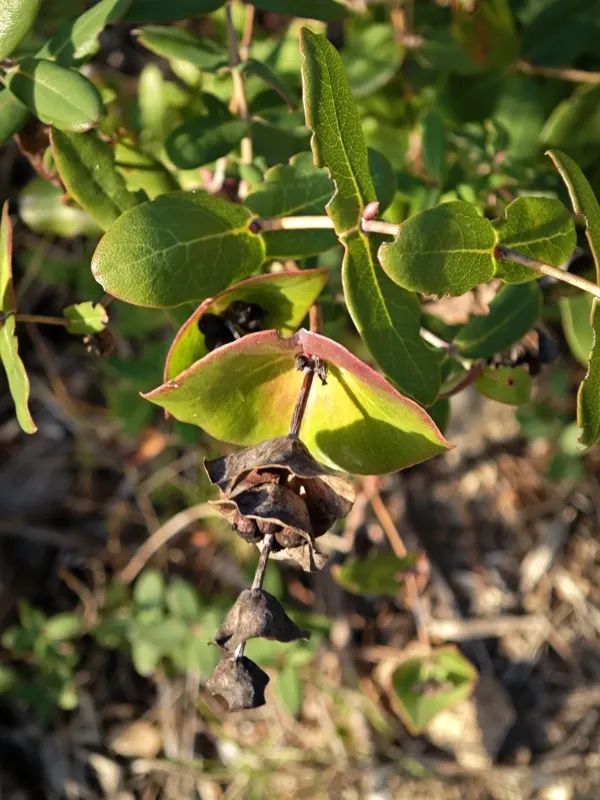
Botanically, the plant is distinguished by its perfoliate leaves, which appear fused at the base around the stem. It produces clusters of fragrant, tubular flowers that transition in color from cream-white to yellowish-pink, creating a decorative visual effect.
The cultural requirements demand full sun or partial shade exposure. Lonicera implexa is well-adapted to rocky, calcareous, or well-drained loamy soils. It displays significant tolerance to drought once the root system is well-established.
Agrotechnical practices involve regular pruning to manage its vigorous climbing habit and to promote denser foliage growth. While it is hardy in Mediterranean zones, protection from severe frost is necessary if cultivated in cooler, temperate climate regions.
The plant is utilized primarily for ornamental purposes. It is highly valued in landscape architecture for covering fences, pergolas, and stone walls, providing dense evergreen cover and seasonal fragrance throughout the flowering period.
Main diseases and pests
Like other honeysuckle species, Lonicera implexa is susceptible to aphid infestations, which can cause leaf curling and stunt growth. Scale insects are another potential pest that can colonize the stems, necessitating monitoring and treatment.
Pathogens such as powdery mildew can affect the foliage during periods of high humidity and poor ventilation. Proper spacing and avoiding overhead irrigation help in maintaining the overall health of the plant and preventing fungal outbreaks.